Saturday, September 13, 2014

Chilean memory between continuity and rupture

Full text of my speech on “CHILE BETWEEN CONTINUITY AND RUPTURE”

I will start with a quote by Victor Jara – one with several interpretations that sets the scene for a discussion of memory frameworks in Chile departing from la nueva canción Chilena. Brutally tortured and murdered by the military in the aftermath of the dictatorship, Víctor Jara is synonymous with the nueva canción movement – the militant song movement in Chile. Victor had once stated, “I need the wood and strings of my guitar to give vent to sadness or happiness, some verse which opens the heart like a wound, some line which helps us all to turn from inside ourselves to look out and see the world with new eyes.”

Salvador Allende’s brief presidency accomplished this and more. The support of the masses, given to Allende during his electoral campaign, brought about the fulfilling of a dream -inscribed in songs of unity such as Canción del Poder Popular and Venceremos! Allende’s campaign was also epitomised by a banner that expressed support for cultural foundation within the revolution: “There is no revolution without songs”. The musicians themselves participated wholeheartedly in Allende’s electoral campaign, becoming cultural ambassadors for the socialist revolution during Allende’s presidency. Nueva canción songs became the voice of the people. In turn, the people became a unified entity. It was the widespread participation of the people, the nueva canción movement, the amalgamation of people and aspirations within a socialist revolution; that also created strong foundations for the memory framework that was able to fight the imposed dictatorship oblivion.

The last inscription of this unity between Allende, the nueva canción movement and the people, can be seen in the beautiful song El pueblo unido jamas sera vencido – The people, united, will never be defeated. Unfortunately, this hymn was short lived. Only a few weeks later, Chile’s socialist revolution was brutally destroyed by Pinochet’s US-backed dictatorship. The metaphor of el pueblo unido, therefore, was challenged to move beyond Allende and the atrocities of the dictatorship. It had to reinvent itself, to become part of the memory process that even now, remains fragmented within two major frameworks – continuity and rupture.
A few weeks ago, writing about Palestine, I included an observation about the importance of collective memory. Very briefly, because the full quote would generate various references, I stated that imperialism attempts to fragment collective memory into selective remembrance to enforce a constant impunity. This is also what neoliberal violence achieved in Chile. Oblivion, or forgetting, was Pinochet’s final legacy – an attempt to silence the whole process of memory.

Briefly, here is an overview of what Pinochet instructed Chileans to forget:

Over 1200 detention and torture centers – where detainees were electrocuted, sexually violated, brutally beaten, used for biological and chemical weapon experimentation, forced to hear or witness the torture of their comrades and, in thousands of cases, administered cyanide injections, following which the bodies would be burned in drums or else packaged and loaded onto helicopters to be dropped into the ocean.

Pinochet also wanted Chileans to forget about direct orders regarding the targeting of communist party and MIR militants. However, several testimonies attest to the fact that Pinochet personally ordered the detention, torture and extermination of many opponents.
Dictatorship terror was meticulously planned. Whether it concerned the banning of nueva canción material, the burning of books deemed subversive, or the intelligence operations carried out to destroy leftist resistance, the intent was to create an imposition upon Chileans that would ultimately attempt to control not only society’s actions, but also memory – the complexities of which remain evident to date.

Chile’s September 11 intensified the deep divide in memory, contributing to further rupture. The Chilean right wing, endorsing Pinochet’s insistence upon oblivion, generated an alien history incompatible with the realities of the dictatorship. Departing from the dictatorship as “Chile’s salvation”, it was convenient for the right wing to enforce its interpretation of the atrocities as allegedly necessary to save Chile. Only recently, Adriana Rivas, a former DINA agent now residing in Australia and wanted by the Chilean courts for her participation in the crimes committed at Cuartel Simon Bolivar, stated that her years at DINA were the best of her life. The glorification of torture was normalised, generating absolute indifference to the repercussions of such violence. Right wing historian, Gisela Silva Encina, biographer of former DINA Agent Miguel Krassnoff, describes the torturer as “a prisoner for serving Chile”.

The right has created a myth that suits their denial. Pinochet had breakfast every day with Head of DINA Manuel Contreras, had full knowledge of targeted militants and their fates, yet was allowed to escape justice on accounts of alleged dementia. Victor Jara’s alleged murderer, Pedro Barrientos, resides safely in Florida, protected by the country that instigated the coup.Last year, former torture instructor Cristian Labbé was offered a lecturing post on the topic of “the evolution of political thought in Chile”. A former DINA agent recounts the elaborate system of fabricated identities, not only of agents serving at Cuartel Simon Bolivar, but also of the victims, in order to eliminate all possible traces and ensure a complete disappearance. Three years ago, the right-wing government of Sebastian Piñera decided to eliminate all references to “dictatorship” in primary school textbooks – a plan to divest younger generations of memory. The plan however, is said to have emerged during Michelle Bachelet’s previous presidency – a woman who was tortured by the dictatorship and who applied Pinochet’s anti-terror laws to incriminate Mapuche resistance. With Chile’s political left being severely compromised, the struggle for memory has essentially been left to the people.
As long as the rupture in memory exists, there will be the necessity to discover and articulate the shared history, which has been manipulated and interpreted according to the political spectrum. However, Chilean memory faces additional hardships. The Concertacion governments remained under a dictatorial constitution that granted impunity to former state players and agents. Hence, official efforts to reconstruct history were limited. Human rights organisations, the relatives of the disappeared, victims of torture, are still awaiting slivers of truth to emerge.

The struggle is about truth rather than justice. The magnitude of crimes ridicules the concept of justice for victims. It is an impossible outcome – no wonder the resilient slogan is entrenched in memory. Neither forgiveness, nor oblivion. It is a legitimate form of resistance against state impunity, which is reflected in various contemporary issues in Chilean society – all resulting from the dictatorship. Besides the controversies in education, with former agents deciding the curriculum, health services have also become a source of contention. Impunity has allowed medical torturers to work in clinics and hospitals – a desecration of the profession. These surgeons and general practitioners in the past were collaborating with torturers, making sure dictatorship victims could survive another round of immense cruelties – relieving pain without curing the sustained injuries. There are published lists detailing the location of these former torturers, yet dictatorship impunity has so far allowed them protection, despite various incriminating testimonies.

The state’s complicity in safeguarding impunity has resulted in several doubts with regard to the official version of events. It is impossible to go into intricate detail about the 3,200 disappeared people. However, it is worth mentioning the suspicious circumstances regarding the deaths of Salvador Allende and Chilean poet Pablo Neruda.
Allende’s death, described as suicide by official sources, still remains a source of debate and controversy. A book published last year in Chile gives an alternative version – that of Allende being murdered during the assault on La Moneda. Given the circumstances of his death and the fact that, despite his stance against armed resistance which resulted in clashes with the MIR, Allende did not hesitate to use weapons during the assault, murder remains a possibility. The book, authored by Francisco Marín, also draws upon forensic detail discussed with Luis Ravanal. Although autopsies have determined suicide, doubt remains entrenched within Chilean memory – the main reason being the impossibility of trusting state institutions with narrating a true version of history. In this case, there needs to be a proper recuperation of memory. For example, one might question how, in the event that Allende was murdered, would the memory framework change and to what extent? Many cite Allende’s final broadcast as proof of suicide. However this is subject to interpretation. It is not a matter of choosing between details, or determining what remembrance should constitute. The justified doubts intensify the rupture caused by the dictatorship, rendering memory a traumatic experience.
The narrative surrounding Pablo Neruda’s death is even more firmly grounded. One of Pinochet’s main struggles was with the dissemination of culture and learning – a fear that led the dictatorship to collaborate with several countries in order to spy on writers and intellectuals in exile. Pablo Neruda, a former ambassador in Allende’s era and also a well known poet, is known to have wanted to go into exile in order to start resistance abroad. According to Manuel Araya who was Neruda’s chauffeur, the poet was administered a toxic injection while residing at the Clinica Santa Maria – a temporary adjustment until plans for exile were finalised. Neruda’s death was put down to advanced prostate cancer. However, while there is no denial that Neruda was indeed suffering from cancer, radiology reports have not specified the presence of metastasis. Additionally, the newspaper El Mercurio, affiliated to the dictatorship, had been issuing warnings about Neruda’s impending death, with Pinochet hastening to inform the people that “if Neruda dies, it will be from natural causes.” Preliminary investigations carried out on the exhumed remains of Neruda did not yield evidence of toxic substances, yet other tests are expected to be carried out. However, apart from the consistency of Araya’s testimony, other incidents indicate the possibility of assassination. The Clinica Santa Maria has, in recent months, been under heavier scrutiny with organisations in Chile calling for a complete investigation. This is also the place where Eduardo Frei, a former president of Chile, was assassinated through the administering of toxic substances.
In Neruda’s case, the unknown doctor whose identity is still debated, is alleged to have been Michael Townley – a former CIA and DINA agent now living under the witness protection programme in the US, was employed by Pinochet specifically to aid in the manufacturing of biological and chemical weapons. Townley had also asserted his presence at the extermination center Cuartel Simon Bolívar, experimenting with newly manufactured weapons upon two indigenous detainees.
Additionally, the Fundacion Neruda vehemently refused initial requests to cooperate in the ongoing investigation into Neruda’s assassination. Instead, the Foundation endorsed the dictatorship’s official statement. However, further research reveals a sinister network in which the foundation’s affairs, for example, were regulated by people aligned with the dictatorship. Neruda had wanted to bequeath la Isla Negra as a retreat for artists and intellectuals – a wish that was disregarded by the Foundation. Additionally, the foundation became economically aligned with Cristalerias Chile – an enterprise founded by Ricardo Claro who was a torture coordinator and financial supporter of Pinochet’s dictatorship.

Hence the determination of a man who immediately denounced Allende’s death as murder, and who stated his intention to fight the dictatorship from exile in Mexico, was brutally exterminated to soothe Pinochet’s obsession. Many have accused Araya of fabricating testimony, but his version of events is much more in concordance with the usual practices of the dictatorship against influential opponents, than the official version circulated by the state and endorsed by the corrupt foundation.

I have here focused upon “icons” of the Chilean left to give an overview not only of the rupture caused by the dictatorship through violence, but also the tenacious struggle of Chileans who suffered under the dictatorship for their rightful memory which is reflected, for example, in the persistence exhibited by the women of Calama to discover the mass graves of men disappeared during the Caravan of Death massacres, which marked the beginning of systematic extermination and disappearance. Chile’s history and memory is an emblematic reflection of the destruction wrought by violence – the same violence that imperialism has unleashed upon various countries while hypocritically calling upon people to embrace non-violent forms of resistance. The Cuban Revolution, and indeed Fidel, are proof that armed resistance against imperialist violence is the only way to liberation – a legitimate struggle against usurping power. In his meeting with Allende, Fidel had warned the Chilean president of the importance of arming the masses, sensing the possibility of impending military action against Allende’s presidency. Had the masses been armed, history might have been inscribed differently. But, for Chile, Allende had managed to impart a socialist revolutionary process through the already-existent democratic frameworks. Meanwhile, as Chileans struggle to validate their memory, the state remains willingly shackled to a dictatorial constitution, ensuring Pinochet’s imposition of oblivion still holds sway over society.

Wednesday, June 4, 2014

Rosauro Martinez Labbe implicated in the murders of three MIR militants

The Court of Appeals in Valdivia welcomed the request of visiting judge Emma Diaz Yevenez to investigate human rights violations committed during the dictatorship, which implicate Rosauro Martinez Labbe in the murder of three MIR militants.

According to the ruling issued by the Valdivia Court of Appeals, preliminary investigations have yielded "justified suspicion of the involvement of Rosauro Martinez Labbe as the perpetrator of the crime of murder relating to Patricio Alejandro Calfuquir Henriquez, Prospero del Carmen Guzman Soto and Jose Eugenio Monsalve Sandoval, on September 20, 1981, in Remeco Alto."

In order to be processed by the Chilean courts for the murders of the MIR militants, Martinez needs to be ousted from his parliamentary role as deputy affiliated with Renovacion Nacional. Martinez has denied involvement with DINA, yet official documents signed by DINA Chief Manuel Contreras indicate his admission on January 31, 1977. Martinez has also been implicated, together with former torture instructor Cristian Labbe, in the murder of Spanish diplomat Carmel Soria.

A petition calling for judicial investigation into Martinez's role has been launched in the name of the victims' families.

The campaign to eliminate MIR militants, which Martinez commanded, is known as Operacion Machete. Testimony by three witnesses: Eduardo Alberto Inostroza Reyes, Sergio Aliro Cardenas Navarro and Alfonso Rosa, assert Martinez's role and direct participation, giving the order to fire upon the dwelling in which Calfuquir, Guzman and Monsalve were gathered. The MIR militants were betrayed by their hostess who, after providing them with food, reported to the police.

Guzman received 28 bullet wounds in the abdomen fired by long distance automatic weapons, deemed the cause of death by autopsy results, which also reported various fractures and perforated organs. Calfuquir was also murdered by long distance automatic heavy weapons, receiving five bullet wounds to the abdomen causing death, as well as fractures and ruptured organs.

Apart from Martinez, Conrado Vicente Garcia Gaier and Enrique Erasmo Sandoval Arancibia are also accused of participating in the murders.


Tuesday, May 13, 2014

75 former DINA agents sentenced for disappearance of socialist militant

Imagen foto_00000001In a case related to Operacion Colombo, the Santiago Court of Appeals presided over by Judge Hernan Crisosto sentenced 75 former DINA agents for their role in the kidnapping and subsequent disappearance of  socialist militant Jorge Arturo Grez Aburto, affiliated primarily with MIR (until 1972) and later with the Socialist Party.
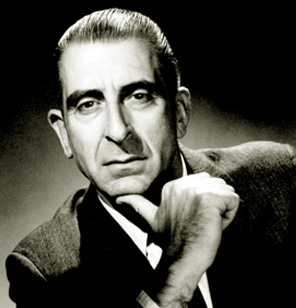
The sentence pertained to Judge Crisosto's first case regarding human rights violations committed during the dictatorship era.

Former DINA chief Manuel Contreras, as well as former DINA agents Cesar Manriquez Bravo, Pedro Espinoza Bravo, Marcelo Moren Brito, Miguel Krassnoff Martchenko, and Gerardo Urrich Gonzales were sentenced to 13 years in prison for their role in the kidnapping and disappearance of Grez.

The case pertained to investigation previously carried out by the late Judge Victor Montiglio. Montiglio was also responsible for the investigations into the Calle Conferencia cases, as well as the torture and extermination centre, Cuartel Simon Bolivar.

A former philosophy student, Grez was kidnapped on May 23, 1974 while at an art gallery in Santiago and transferred to torture centres Londres 38, Estadio Chile and Cuatro Alamos. According to testimony, Grez was blindfolded and subjected to continuous torture by DINA agents, in attempts to force the divulging of information pertaining to militant activities and the whereabouts of his companions. Grez was allegedly last seen in July 1974.

Other agents sentenced by Judge Crisosto:
Sentenced to 10 years imprisonment for responsibility in the kidnapping of Grez
Raúl Eduardo Iturriaga Neumann; Gerardo Ernesto Godoy García; Ricardo Víctor Lawrence Mires; Ciro Ernesto Torré Sáez; Sergio Hernán Castillo González; Manuel Andrés Carevic Cubillos; José Nelson Fuentealba Saldías; Basclay Humberto Zapata Reyes; José Enrique Fuentes Torres; José Mario Fritz Esparza; Julio José Hoyos Zegarra; Nelson Alberto Paz Bustamante; Claudio Orlando Orellana de la Pinta; Enrique Tránsito Gutiérrez Rubilar; Gustavo Galvarino Carumán Soto; Hiro Álvarez Vega; José Alfonso Ojeda Obando; Luis Salvador Villarroel Gutiérrez; Olegario Enrique González Moreno; Orlando Jesús Torrejón Gatica; Rudeslindo Urrutia Jorquera; Alfredo Orlando Moya Tejeda; Carlos Alfonso Sáez Sanhueza; Fernando Enrique Guerra Guajardo; Hernán Patricio Valenzuela Salas; Hugo Rubén Delgado Carrasco; José Fernando Morales Bastías; Juan Alfredo Villanueva Alvear; Juan Evaristo Duarte Gallegos; Lautaro Eugenio Díaz Espinoza; Leonidas Emiliano Méndez Moreno; Pedro Ariel Araneda Araneda; Rafael De Jesús Riveros Frost; Víctor Manuel Alvarez Droguett; y Víctor Manuel Molina Astete.

Sentenced to 4 years imprisonment for complicity in kidnapping of Grez:
 Luis Eduardo Mora Cerda; José Jaime Mora Diocares; Alfonso Humberto Quiroz Quintana; Camilo Torres Negrier; Carlos Justo Bermúdez Méndez; Claudio Enrique Pacheco Fernández; Fernando Adrián Roa Montaña: Gerardo Meza Acuña; Héctor Raúl Valdebenito Araya; Jaime Humberto Paris Ramos; Jorge Laureano Sagardia Monje; José Dorohi Hormazábal Rodríguez; José Manuel Sarmiento Sotelo; José Stalin Muñoz Leal; Juan Manuel Troncoso Soto; Juvenal Alfonso Piña Garrido; Luis René Torres Méndez; Manuel Antonio Montre Méndez; Máximo Ramón Aliaga Soto; Moisés Paulino Campos Figueroa; Nelson Aquiles Ortiz Vignolo; Nelson Eduardo Iturriaga Cortes; Orlando Enrique González Moreno; Pedro Segundo Bitterlich Jaramillo; Reinaldo Alfonso Concha Orellana; Sergio Hernán Castro Andrade; Gustavo Humberto Apablaza Meneses; Héctor Carlos Díaz Cabezas; Jorge Antonio Lepileo Barrios; Luis Fernando Espinace Contreras; Oscar Belarmino La Flor Flores; Rufino Espinoza Espinoza y Sergio Iván Díaz Lara.

Impunity: In the case of former DINA agent Victor Manuel de la Cruz San Martin Jimenez, accomplice in the kidnapping of Grez, the four year prison sentence was suspended on account of alleged dementia.


Thursday, April 10, 2014

Assassination of former Chilean President Eduardo Frei Montalva confirmed

Former Chilean President Eduardo Frei Montalva
Decades of suspicion regarding the circumstances under which former Chilean president Eduardo Frei Montalva met his end have seemingly terminated into an expected outcome. During a court sitting on March 7, Andres Antonio Valenzuela, known as 'el Papudo', from the Comando Conjunto declared that Frei was assassinated during his stay at the Clinic Santa Lucia following a hiatal hernia operation.

According to Valenzuela's testimony, the news was related to him by a colleague, Alex Carrasco, while visiting the Chilean Embassy in Peru. Working as a nurse at the Clinica Santa Lucia, Carrasco's wife  revealed that a medical practitioner had murdered Frei by applying infected compresses to the post-operative wound.

It is stated that the infected compresses were prepared by Eugenio Berrios, who was later murdered in Uruguay. Berrios, a DINA agent and biochemist, was tasked with producing biological and chemical weapons for the dictatorship together with CIA and DINA agent, Michael Townley.

Valenzuela has lived in exile in France after deserting Chile in 1984, following his defection from the Air Force and the Joint Command, as well as divulging of information regarding kidnappings, torture and disappearances of Pinochet's opponents. He deemed his return to Chile as an effort "to cooperate with regard to all cases pertaining to human rights violations".

Frei's relatives deemed the report as "confirming what Chileans already know, proving that there was organisation within the dictatorship to commit crimes against humanity."

The nature of the crime and recently revealed proof is also reminiscent of the sinister circumstances surrounding Pablo Neruda's death. While preliminary analysis confirmed the presence of cancer in Neruda's body, testimony by Manuel Araya with regard to Neruda's death at the hands of the dictatorship through lethal injection warrants further attention and investigation.


Friday, January 31, 2014

The Calama massacres: five victims identified, including Carlos Berger, husband of human rights lawyer Carmen Hertz

Carlos Alfredo Escobedo Caris
Mario Arguelles Toro
Leopoldo Llanos, the visiting minister in charge of investigating human rights violations committed during Pinochet's dictatorship, confirmed the identification of five victims of the Caravan of Death. Servicio Medico Legal (SML) asserted that the identified remains correspond to the massacres committed in Calama on October 19, 1973.


Luis Alfonso Moreno Villaroel
The identification of the victims was confirmed during a meeting with relatives, in which the scientific evidence regarding the massacre was discussed. It was established that the victims were murdered prior to 1975 and their remains buried for over ten years, until the illegal exhumation Operacion Retiro de Televisores was carried out under direct orders from Pinochet, rendering any discovery of intact remains impossible. As with other previously identified victims, only fragments of bones were discovered due to heavy machinery being used to exhume the victims for permanent disappearance, either through burning in drums or else packaged and dropped into the ocean from helicopters. The order to exhume bodies from mass graves was given by Pinochet after the discovery of fifteen bodies in an abandoned furnace in Lonquen.

Hernan Elizardo Moreno Villaroel

The identities of the victims correspond to:

Carlos Alfredo Escobedo Caris, age 24, socialist militant. Detained on September 26, 1973. Incarcerated at the Calama Prison at the time of execution.

Hernan Elizardo Moreno Villaroel, age 29, socialist militant. Detained under house arrest from September 12 to October 12, 1973, later transferred to Calama Prison. No evidence of judicial process or condemnation exists, however it is rumoured that Moreno was sentenced to two years in prison.

Mario Arguelles Toro, age 34, socialist. Detained on September 26, 1973 and condemned to three years imprisonment on October 16, 1973. Murdered while awaiting transfer to incarceration.


Carlos Berger Guralnik
Luis Alfonso Moreno Villaroel, age 30, socialist militant. Detained on October 12, 1973 after presenting himself voluntarily to the military and incarcerated in Calama Prison. There is no indication of judicial process or condemnation pertaining to Moreno.

Carlos Berger Guralnik, age 30, husband of human rights lawyer Carmen Hertz. A journalist, lawyer and Communist Party militant, Berger was detained on September 11 1973 and condemned to 60 days in prison on September 29, 1973. Berger's execution occurred while serving his sentence.

Their remains were discovered in a mass grave on the road to San Pedro de Atacama, only 15km away from Calama. The Rettig Commission report established that the victims were brutally mutilated and massacred. The secret burial in a mass grave was carried out to avoid confrontation with the victims' relatives, who later defied the atrocities of the dictatorship and embarked upon a personal search of the Caravan of Death victims.


Sunday, January 5, 2014

Santiago Court of Appeals seeks the extradition of Adriana Rivas Gonzales, former DINA agent and secretary to Manuel Contreras

Imagen foto_00000001
The Santiago Court of Appeals has announced its intention to seek the extradition of former DINA agent and secretary to Manuel Contreras, Adriana Rivas Gonzales. Rivas is implicated in the detention and disappearance of former Communist Party militant Victor Diaz Lopez, one of the many victims in DINA's targeting and extermination of militants during the clandestine operation known as Calle Conferencia. Victor Diaz was detained in Cuartel Simon Bolivar, tortured on the parilla, asphyxiated and later administered a cyanide injection by Gladys Calderon.

Rivas, who currently resides in Australia, defended DINA's torture practices as a "necessary tactic" to coerce leftist militants to reveal their plans and association with others in the struggle against the fascist dictatorship The former Brigada Lautaro agent stated that Pinochet was "a good president" and disassociated herself from the fate of Chile's desaparecidos, adding that the years spent working as a DINA agent were the best years of her youth.

At the age of 20, Rivas joined the Ministry of Defence, taking up a secretarial role. in 1974 she joined DINA after taking instruction in military intelligence and was incorporated in the infamous Brigada Lautaro - organised by Manuel Contreras to provide protection for influential officers within DINA. The brigade was later entrusted with clandestine operations relating to the detention, torture and extermination of MIR and Communist Party militants, operating secretly at Cuartel Simon Bolivar, also described as the place where no one got out alive. The existence of the extermination centre was revealed by Jorgelino Vergara Bravo, whose testimony as narrated to Chilean investigative author Javier Rebolledo included torture practices, the administration of cyanide injections prior to the disposal of bodies, the packaging and disappearance of bodies, mock executions, sarin gas experiments by Michael Townley which were witnessed by various DINA officials, looting, organ trafficking in coordination with Colonia Dignidad, and the degradation inflicted upon detainees as they begged to be murdered in order to avoid systematic and incessant torture.

Rivas has been living in Australia since 1978. Her return to Chile in 2006 to celebrate her niece's wedding resulted in her indictment by Chilean courts for her role in Calle Conferencia. Following her release on bail, Rivas was aided by a friend in absconding from Chile and returned to Australia via Argentina.
 

Wednesday, January 1, 2014

Former DINA agents to be interrogated about the murder of Spanish diplomat Carmelo Soria

Minister Lamberto Cisternas from the Supreme Court has authorised the interrogation of two former DINA agents. Former torture instructor; also former mayor of Providencia Cristian Labbe,as well as Rosauro Martinez are being investigated by the Brigada Investigadora de Delitos contra los Derechos Humanos for their role in the murder of Spanish diplomat Camelo Soria.

labbé martinezLabbe has so far benefited from impunity, despite a multitude of testimonies placing him at the helm of torture instruction and administration at Rocas de Santo Domingo, Tejas Verdes, Venda Sexy, Villa Grimaldi and Londres 38. Labbe was also involved in the murder and disappearance of 15 peasants in Valdivia, as well as the targeting of MIR and Communist Party militants during Operacion Colombo.

Martinez has been accused of participating in the execution of MIR militants in 1981. Despite vehement denials of his involvement with DINA, official documents signed by Manuel Contreras indicate Martinez's admission to DINA on January 31, 1977.

Soria, a former Unidad Popular advisor was abducted by DINA agents in 1976. His corpse was discovered in Canal del Carmen in Santiago. Official statements had declared the cause of death a car accident, however it was established that Soria had been detained by DINA in Villa Naranja, also utilised by Michael Townley and Eugenio Berrios for the production of sarin gas.

The Tejas Verdes contingent have been thought to possess information regarding the murder of Soria. According to Chilean investigative author Javier Rebolledo, torture survivor Anatolio Zarate recognised Soria during a torture session in Tejas Verdes.  Apart from Labbe's role of torture instructor and torturer at Tejas Verdes, the former DINA agent was also at the helm of Brigada Mulchen together with General Eduardo Aldunate Hernan. The brigade was relatively unknown compared to other branches within the structure of DINA, and operated under direct orders from Augusto Pinochet, carrying out intelligence operations and participating in the extermination of leftist militants at Cuartel Simon Bolivar. Its role in the murder of Carmelo Soria was confirmed by the Chilean Court of Appeals in 1992.


Friday, December 27, 2013

In Spanish translation: El despertar de los cuervos. Tejas Verdes, el origen del exterminio en Chile

A Spanish translation of my book review published in Ceibo Ediciones http://www.ceiboediciones.blogspot.com/2013/12/venceremos-chile-un-viaje-traves-de-la.html
 
Siguiendo el relato macabro 'La Danza de los Cuervos: El Destino final de de los Detenidos desaparecidos ", que describe la tortura y exterminio de opositores de la dictadura llevaron a cabo en Cuartel Simón Bolívar, el último libro de Javier Rebolledo,' El despertar de los Cuervos. Tejas Verdes, el origen del exterminio en Chile "(Ceibo Ediciones, 2013) ofrece una descripción detallada de la formación de la DINA en Tejas Verdes - el lugar donde se llevó a cabo la experimentación de la tortura en los primeros días de la dictadura.
 
El prólogo del libro describe la perversidad como un término inadecuado en relación a las atrocidades de la dictadura cometidos en Chile. Con la plena verdad de horrores aún ocultos a la nación, el tema de la tortura, exterminio y desaparición está envuelto en varios niveles de anonimato - el anonimato impuesta por la DINA sobre los desaparecidos, torturadores, cuya identidad todavía no divulgada, y las víctimas de tortura que se resisten a revelar sus cuentas y añadir al marco memoria colectiva chilena.
Alternando entre los testimonios de sobrevivientes de la tortura, la información de los documentos de investigación oficial y el comentario crítico, cuenta de Tejas Verdes de Rebolledo valida su declaración anterior insistir en la diferencia entre la información convencional sobre atrocidades y testimonios de sobrevivientes. La deshumanización de los detenidos a través de diversas formas de tortura, la degradación, la manipulación de la cultura y la negativa a reconocer la identidad individual de los detenidos crearon relatos desgarradores vacilantes entre la necesidad de reconocimiento y las experiencias que la DINA trató de sumir en un imposición generalizada del olvido con el fin de consolidar la impunidad.
La importancia de las Tejas Verdes ha sido eclipsado por otros centros de tortura infames como Londres 38 y Villa Grimaldi, así como por las operaciones llevadas a cabo por la DINA que implica el exterminio de militantes del MIR y del Partido Comunista, como la Caravana de la Muerte y la Operación Colombo. Sin embargo, antes de la creación oficial de la DINA, los opositores políticos de Augusto Pinochet ya estaban siendo torturados y desaparecieron de Tejas Verdes - la tortura y el exterminio centro primario en la historia de la dictadura chilena.
Tejas Verdes sirvió de iniciación a la tortura y el centro de coordinación de otros centros de tortura y exterminio en Chile. La mayoría de los torturadores recibían su instrucción en Tejas Verdes - nombres como Marcelo Moren Brito, Miguel Krassnoff Martchenko, Ricardo Lawrence y Cristian Labb é ocupan un lugar destacado en la historia de la dictadura. Operando bajo diversas brigadas de agentes de la DINA se encargaron de las operaciones de inteligencia, la orientación específica de MIR y militantes del Partido Comunista, la seguridad y las operaciones clandestinas de exterminio de opositores de la dictadura. De especial mención es el papel de Brito en la Caravana de la Muerte y las prácticas de tortura de Krassnoff en Londres 38. Brigada Halcón, que funcionó en Londres 38, también estuvo involucrado en el secuestro, tortura y asesinato de Víctor Díaz que tuvo lugar al Cuartel Simón Bolívar. El refinamiento de la tortura se practica en otros centros de tortura como la Clínica Santa Lucía - una cuestión examinada por Patricio Bustos Streeter indica un continuo intento de borrar los errores anteriores y cultivar un elaborado impunidad. Rebolledo también discute la existencia de Brigada Mulchén, bajo el mando de Cristian Labbé - una brigada relativamente desconocido involucrado en operaciones clandestinas, pero cuya complicidad ha sido difícil de probar, además del asesinato del diplomático español Carmelo Soria en 1976.
Rebolledo muestra cómo, a pesar de las investigaciones judiciales iniciadas por el juez Alejandro Solís, ha sido imposible determinar el número de detenidos en Tejas Verdes. Lo que surgió, sin embargo, eran los detalles de una red de terribles torturas encabezado por Manuel Contreras Sepúlveda - un testimonio del sadismo en el nombre de erradicar el marxismo de Chile. Los torturadores acusados ​​por el juez Solís se presentaron como patriotas injustamente acusados, que supuestamente habían salvado a Chile de las garras de una dictadura comunista. A través de los vestigios expuestos de poder dictatorial durante los juicios de ex agentes de la DINA, como las amenazas de Contreras a juez Solís, es posible discernir los rasgos de una organización que opera con impunidad.
Los testimonios de Anatolio Zárate, Ana Becerra, Olga Letelier y Feliciano Cerda, complementadas con otras narraciones recogidas de documentos de investigación oficial, retratan la extensión de violaciónes de derechos humanos que los agentes de la DINA complacen pulg Las sesiones de tortura fueron diseñados para crear una barrera de magnitud inmensa entre torturador y detenido, entre los detenidos y la humanidad. Sobrevivientes de la tortura describen las descargas eléctricas a través del uso de la parrilla, la violencia y la coacción sexuales, palizas, simulacros de ejecución, la inserción de los ratones y arañas en la vagina, la mutilación genital, el uso de perros en la tortura sexual, las mutilaciones, amputaciones y cauterización crudo, violación en presencia de los miembros de la familia, el lenguaje degradante, así como la ingestión forzada de orina y heces. Motivos para la muerte en nombre de los detenidos se encontraron con brotes adicionales del tormento.
Los ex soldados que testificaron contra Contreras afirmó que los detenidos fueron atraídos a Tejas Verdes en la premisa de 'discutir' puntos de contención, que se imparte en una carta oficial.Detenidos prospectivos suelen cumplirse y no mostraron resistencia, descubriendo a su llegada a la naturaleza de la supuesta discusión de la DINA. Algunos fueron asesinados tras el pretexto inventado de intentar escapar, otros que expresaron sus temores de ser asesinado, como detenido Lucho Normabuena, se desapareció de forma sistemática. Los profesionales médicos que intentaron inscribir la verdad acerca de la causa de la muerte fueron detenidos en Tejas Verdes. Los detenidos fueron obligados a escuchar o presenciar sus amigos torturados, mientras que la DINA se embarcó en planes con la esperanza de obtener información de los detenidos sobre otros militantes detenidos. Olga Letelier describe cómo normalmente se atendieron sesiones de tortura por un grupo de agentes de la DINA, alternando entre mirar y participar en la tortura.
El libro también se explaya acerca de la red de profesionales de la salud contratados para supervisar la tortura y dar instrucciones a los torturadores de la DINA en el reconocimiento de los umbrales individuales para reducir la posibilidad de asesinato durante una sesión de tortura. Con la mayoría de los torturadores médicos siguen beneficiándose de la impunidad, la sociedad chilena tiene que lidiar con una contradicción - que de confiar su salud a los médicos cuya complicidad en la tortura y el asesinato está todavía oculto. Una lista de los ex torturadores médicos aún practican su profesión ha estado circulando en Internet, en un intento por exponer más atrocidades de la DINA. La literatura sobre los torturadores médicos en el libro retrata explícitamente cómo la dictadura desfigurado la profesión. Entre otros, el libro de Rebolledo se refiere a Vittorio Orvieto Tiplisky, quien comenzó su carrera con la DINA de Tejas Verdes y más tarde participó en el exterminio de militantes en el Cuartel Simón Bolívar, enfermera Gladys Calerdon que administró inyecciones letales a los detenidos torturados antes de su desaparición y Roberto Lailhacar , quien recientemente admitió a la eliminación de seis desapareció opositores de la dictadura en los pozos en su propiedad en Curacaví.
Rebolledo ha legado otro tratado importante de la historia reciente de Chile. Afirma una declaración anterior de la autora chilena y sobreviviente de Tejas Verdes, Hernán Valdés, quien resumió Tejas Verdes así: "Todo lo que sabía acerca del mal hasta entonces era sólo caricatura, sólo la literatura. Ahora el mal ha perdido toda referencia moral. "Súplica de Pinochet durante décadas el olvido más tarde sirvió como un recordatorio de lo que la oposición de izquierda había luchado en contra. El olvido ya había sido implementado por la dictadura antes de cualquier convocatoria pública, como se evidencia a partir de la década de desapariciones de Tejas Verdes, la certeza de la impunidad, que se hizo alarde de una y otra vez a los detenidos torturados, las adopciones ilegales de los bebés que nacen a los detenidos a fin de eliminar rastros de violación en los centros de detención, los médicos que trabajaban bajo asumieron nombres, separando así su papel de verdugos del rol asumido dentro de los camarotes más amplios de la sociedad. El testimonio detallado y comentario en este libro demuestran que Tejas Verdes debería estar al frente de ninguna investigación detallada sobre la dictadura de Pinochet - es a través de una comprensión de Tejas Verdes como referencia primaria a la violación de los derechos humanos que se puede comprender la red de tortura prolongada y complicidad del Estado durante la dictadura chilena.
Publicado por Ramona Wadi

El despertar de los cuervos. Tejas Verdes, el origen del exterminio en Chile

El Despertar De Los Cuervos Tejas Verdes. El Origen Del Exterminio En
Following the macabre narration ‘La Danza de los Cuervos: el destino final de los detenidos desaparecidos’, which describes the torture and extermination of dictatorship opponents carried out in Cuartel Simon Bolivar, Javier Rebolledo’s latest book, ‘El despertar de los Cuervos. Tejas Verdes, el origen del exterminio en Chile’ (Ceibo Ediciones, 2013) provides a detailed account of DINA’s formation in Tejas Verdes – the location where experimentation with torture was carried out in the early days of the dictatorship.

 
The prologue to the book describes perversity as an inadequate term in relation to dictatorship atrocities committed in Chile. With the full truth of horrors still concealed from the nation, the subject of torture, extermination and disappearance is shrouded within various levels of anonymity – the anonymity enforced by DINA upon the disappeared, torturers whose identity is still undisclosed, and tortured victims who are reluctant to disclose their accounts and add to the Chilean collective memory framework.
Alternating between testimonies from torture survivors, information from official investigation documents and critical commentary, Rebolledo’s account of Tejas Verdes validates his earlier statement dwelling on the difference between conventional reporting about atrocities and survivor testimony. The dehumanisation of detainees through various forms of torture, degradation, manipulation of culture and a refusal to acknowledge individual identity of detainees created harrowing narratives vacillating between the need for recognition and the experiences which DINA attempted to mire within a widespread imposition of oblivion in order to consolidate impunity.
The importance of Tejas Verdes has been overshadowed by other infamous torture centres such as Londres 38 and Villa Grimaldi, as well as by operations carried out by DINA involving the extermination of MIR and Communist Party militants such as the Caravan of Death and Operacion Colombo. However, prior to the formal establishment of DINA, political opponents of Augusto Pinochet were already being tortured and disappeared from Tejas Verdes – the primary torture and extermination centre in Chilean dictatorship history.
Tejas Verdes served as the initiation into torture and a focal point for other torture and extermination centres in Chile. The majority of torturers received their instruction at Tejas Verdes – names such as Marcelo Moren Brito, Miguel Krassnoff Martchenko, Ricardo Lawrence and Cristian Labbé featuring prominently in dictatorship history. Operating under various brigades, DINA agents were tasked with intelligence operations, specific targeting of MIR and Communist Party militants, security and clandestine operations involving extermination of dictatorship opponents. Of particular mention are Brito’s role in the Caravan of Death and Krassnoff’s torture practices in Londres 38. Brigada Halcón, which operated in Londres 38, was also involved in the kidnapping, torture and murder of Víctor Díaz which occurred at Cuartel Simon Bolivar. The refinement of torture practiced in other torture centres such as Clínica Santa Lucia – an issue discussed by Patricio Bustos Streeter indicates a continuous attempt to obliterate any previous errors and cultivate an elaborate impunity. Rebolledo also discusses the existence of Brigada Mulchén under the command of Cristian Labbé – a relatively unknown brigade involved in clandestine operations but whose complicity has been difficult to prove, apart from the murder of Spanish diplomat Carmelo Soria in 1976.
Rebolledo shows how, despite judicial investigations initiated by Judge Alejandro Solis, it has been impossible to determine the number of detainees held in Tejas Verdes. What emerged, however, were the details of an appalling torture network headed by Manuel Contreras Sepulveda – a testimony of sadism in the name of eradicating Marxism from Chile. Torturers indicted by Judge Solis portrayed themselves as patriots unjustly accused, who had allegedly saved Chile from the grips of a communist dictatorship. Through the exhibited vestiges of dictatorial power during the trials of former DINA agents, such as Contreras’ threats to Judge Solis, it is possible to discern the traits of an organisation which operated with impunity.
The testimonies of Anatolio Zarate, Ana Becerra, Olga Letelier and Feliciano Cerda, supplemented by other narrations garnered from official investigation documents, portray the extent of human rights violations which DINA agents indulged in. The torture sessions were designed to create a barrier of immense magnitude between torturer and detainee, between detainee and humanity. Torture survivors describe electric shocks through use of the parilla, sexual violence and coercion, severe beatings, mock executions, the insertion of mice and spiders in the vagina, genital mutilation, use of dogs in sexual torture, mutilation, amputations and crude cauterisation, violation in the presence of family members, degrading language, as well as forced ingestion of urine and faeces. Pleas for death on behalf of detainees were met with additional bouts of torment.
Former soldiers who testified against Contreras claimed that detainees were lured to Tejas Verdes upon the premise of ‘discussing’ points of contention, which was imparted in an official letter. Prospective detainees usually complied and exhibited no resistance, discovering upon arrival the nature of DINA’s alleged discussion. Some were assassinated upon the fabricated pretext of attempting escape, others who voiced their fears of being murdered, such as detainee Lucho Normabuena, were systematically disappeared. Medical professionals who attempted to inscribe the truth about the cause of death were detained in Tejas Verdes. Detainees were forced to listen or witness their friends being tortured, while DINA embarked upon plans in the hope of extracting information from detainees upon other detained militants. Olga Letelier describes how torture sessions were usually attended by a group of DINA officers, alternating between watching and participating in torture.
The book also expounds upon the network of health care professionals recruited to supervise torture and instruct DINA torturers in recognising individual thresholds to reduce the possibility of murder during a torture session. With most medical torturers still benefiting from impunity, Chilean society has to contend with yet another contradiction – that of entrusting their health to doctors whose complicity in torture and murder is still concealed. A list of former medical torturers still practicing their profession has been circulating on the internet, in a bid to expose further DINA atrocities. The literature dealing with medical torturers in the book explicitly portrays how the dictatorship disfigured the profession. Among others, Rebolledo’s book refers to Vittorio Orvieto Tiplisky, who commenced his career with DINA at Tejas Verdes and later participated in the extermination of militants at Cuartel Simon Bolivar; nurse Gladys Calerdon who administered lethal injections to tortured detainees prior to their disappearance and Roberto Lailhacar, who recently admitted to the disposal of six disappeared dictatorship opponents in wells on his property at Curacaví.
Rebolledo has bequeathed another significant treatise to Chile’s recent history. It affirms a previous statement by Chilean author and survivor of Tejas Verdes, Hernan Valdes, who summarised Tejas Verdes thus: “All I knew about evil until then was only caricature, only literature. Now evil has lost all moral reference.” Pinochet’s plea for oblivion decades later served as a reminder of what leftist opposition had struggled against. Oblivion had already been implemented by the dictatorship prior to any public call, as evidenced from the early disappearances from Tejas Verdes, the certainty of impunity which was flaunted time and again at tortured detainees, the illegal adoptions of babies born to detainees in order to eliminate traces of rape in detention centres, the medical practitioners who worked under assumed names, thus separating their roles as torturers from the role assumed within the wider berths of society. The detailed testimony and commentary in this book prove that Tejas Verdes should be at the helm of any detailed research regarding Pinochet’s dictatorship – it is through an understanding of Tejas Verdes as the primary reference to human rights violation that one can comprehend the extended torture network and state complicity during the Chilean dictatorship.

Friday, November 8, 2013

Despite forensic report, judge insists upon further investigations into Pablo Neruda's death

According to the forensic report released yesterday by Servicio Medio Legal (SML), Pablo Neruda's death was caused by advanced prostate cancer, dispelling allegations of murder which have been sustained primarily by Neruda's chauffer and personal assistant, Manuel Araya. The awaited report ignited further conflict in Chile, challenging the dynamics of memory as opinion fluctuated in a spectrum which ranged from acceptance of the report, cynicism and outright denial.

Chile's right wing attempted to deride the exhumation of Neruda's remains, citing the forensic report as a reaffirmation of the obvious cause of death and describing the process as a manifestation of 'leftist paranoia'. The attempt to reclaim Neruda's memory as the poet of all Chileans, regardless of political affiliations, is reminiscent of the conspiracies detailed in El Doble Asesinato de Neruda, which explains the process through which the dictatorship and affiliated media sought to prepare the public for Neruda's imminent death.

Sentiment on behalf of Chile's left revealed the complexities of the country's memory struggle. While the report was accepted by some as a likely scenario, given the fact that Neruda indeed suffered from cancer, outrage over the published report overshadowed any form of acceptance.

Reaction on social media has cast doubts over the report, drawing comparisons with the death of former Chilean president Eduardo Frei Montalva, allegedly murdered by DINA while hospitalised in Clinica Santa Maria. Reports regarding his death Frei's death have been conflicting - some alleging that he had been administered thallium and mustard gas, while other reports declared the absence of toxic substances.

Neruda's chauffer, Manuel Araya, denounced the report and insisted that the poet had been murdered by the dictatorship at the Clínica Santa María. His allegations regarding the poet's death by lethal injection administered by a doctor whose identity is still disputed have been meticulously researched in light of Pinochet's determination to annihilate all leftist opposition, thus reducing the possibility of formidable opposition to his rule. Research has established that Neruda was planning to go into exile - such an accomplishment would have provided the possibility of an organised intellectual force against the dictatorship, a possibility which Pinochet dreaded due to the possibility of forming a government in exile and which led DINA to track the activity of dissidents and exiles.

Neruda's nephew, Rodolfo Reyes, insisted that the report is inconclusive and does not take into consideration all possible forms of assassination, such as the use of sarin gas - an opinion echoed by the family's lawyer, Eduardo Contreras, who insisted that further investigations should be carried out in order to dispel any fragments of doubt over the poet's death. Forensic expert Guillermo Repetto has also admitted the difficulty of detecting any traces of sarin gas and similar substances, indicating that despite the report's conclusion, the possibility of assassination at the hands of DINA cannot be absolutely eliminated. Judge Mario Carroza has declared the case still open and the possibility of assassination a cause for further investigation.


Wednesday, October 23, 2013

79 DINA agents accused of participation in Calle Conferencia I

Mario Zamorano Donoso
Jorge Muñoz Poutays
Magistrate Miguel Vasquez from the Santiago Court of Appeals has issued an indictment against 79 former DINA agents for their participation in the abduction of seven dictatorship opponents: Mario Zamorano Donoso, Jorge Muñoz Poutays, Uldarico Donaire Cortés, Jaime Donato Avendaño, Elisa Escobar Zepeda, Lenin Díaz Silva and Eliana Espinoza Fernandez, as well as the murder of Víctor Díaz López, all victims of Calle Conferencia I. The clandestine operation targeted MIR and Communist party militants with the intention of destroying the clandestine opposition to Pinochet's  dictatorship between May 1976 and January 1977.

Uldarico Donaire Cortes
Jaime Donato Avendano


Mario Zamorano Donoso, Communist Party member, was detained during an operation which lasted from April 30 to May 6, 1976 from a house in Santiago, which was under DINA observation and its inhabitants forced to cooperate in the clandestine operation in the hope of luring Communist Party members to the dwelling. Zamorano was detained on May 4 and transferred to Villa Grimaldi.
On the same day at 21:00,   Jorge Muñoz Poutays was detained and also transferred to Villa Grimaldi.


20070320031848-elisa-del-carmen-escobar-cepeda-06may76.jpg
Elisa Escobar Cepeda
Eliana Espinoza Fernandez
Uldarico Donaire Cortez and Jaime Patricio Donato Avendaño were detained by DINA on May 5 and transferred to Villa Grimaldi.

Elisa Escobar Cepeda, also a Communist Party member, was detained on May 6 and transferred to Villa Grimaldi.

On May 9 1976, DINA agents detained Lenin Díaz Silva, who was transferred to Villa Grimaldi from where it is assumed that he was disappeared. Eliana Espinoza Fernandez was detained on May 12, 1976 and transferred to Villa Grimaldi.

Victor Diaz
Lenin Diaz Silva
The detention of Víctor Díaz López occurred on May 12 1976. DINA agents detained the Secretary General of the Communist Party and transferred him to Villa Grimaldi for interrogation and brutal torture. He was later taken to DINA's extermination centre Cuartel Simon Bolivar, where he remained for a few months prior to his murder and disappearance. Díaz was asphyxiated, his corpse packed in two big bags and strapped to metal rods ready for transfer to Pedelhue, lifted onto a Puma helicopter to be deposed in the sea, in an undisclosed location. Details regarding the detention of Víctor Díaz at Cuartel Simon Bolivar have been narrated by former DINA agent and aid to Manuel Contreras Jorgelino Vergara Bravo, protagonist of Javier Rebolledo's book 'La danza de los cuervos: el destino final de los detenidos desaparecidos'

Below is a list of former DINA agents charged with the crimes.
01. Manuel Contreras Sepúlveda
02. Pedro Espinoza Bravo
03. Carlos López Tapia
04. Miguel Krassnoff Martchenko
05. Ricardo Lawrence Mires
06. Jorge Madariaga Acevedo
07. Eugenio Fieldhouse Chávez
08. José Fuentealba Saldías
09. Hugo Clavería Leiva
10. José Soto Torres
11. Raúl Soto Pérez
12. Juan Carlos Escobar Valenzuela
13. Jerónimo Neira Méndez
14. Héctor Briones Burgos.
15. Pedro Mora Villanueva.
16. Roberto Rodríguez Manquel.
17. Leonidas Méndez Moreno.
18. Jorge Andrade Gómez.
19. Nelson Herrera Lagos.
20. Juan Morales Salgado.
21. Jorge Sagardía Monje.
22. Héctor Valdebenito Araya.
23. Federico Chaigneau Sepúlveda.
24. Bernardo Daza Navarro
25. Sergio Escalona Acuña
26. Guillermo Ferrán Martínez
27. Gladys Calderón Carreño
28. Elisa Magna Astudillo
29. Heriberto del Carmen Acevedo
30. Emilio Troncoso Vivallos
31. Claudio Pacheco Fernández
32. Jorge Díaz Radulovich
33. Orlando Altamirano Sanhueza
34. Eduardo Cabezas Mardones
35. Jorge Escobar Fuentes
36. René Riveros Valderrama
37. Jorge Pichunmán Curiqueo
38. Orfa Saavedra Vásquez
39. Celinda Aspe Rojas
40. Teresa Navarro Navarro
41. Berta Jiménez Escobar
42. Adriana Rivas González
43. Jorge Arriagada Mora
44. Pedro Bitterlich Jaramillo
45. Eduardo Oyarce Riquelme
46. Guillermo Díaz Ramírez
47. Ana Vilches Muñoz
48. Italia Vacarella Gilio
49. Jorge Manríquez Manterola.
50. Orlando Torrejón Gatica
51. José Manuel Sarmiento Sotelo
52. Manuel Obreque Henríquez
53. Gustavo Guerrero Aguilera
54. Eduardo Garea Guzmán
55. Juvenal Piña Garrido
56. Rufino Jaime Astorga
57. Luis Lagos Yáñez
58. María Angélica Guerrero Soto
59. Sergio Castro Andrade
60. Manuel Montre Méndez
61. Pedro Gutiérrez Valdés
62. Claudio Orellana de la Pinta
63. Joyce Ahumada Despouy
64. Hiro Álvarez Vega
65. José Miguel Meza Serrano
66. José Ojeda Obando
67. Carlos Bermúdez Méndez
68. Víctor Manuel Álvarez Droguett
69. Eduardo Reyes Lagos
70. Marilin Silva Vergara
71. Hernán Sovino Maturana
72. José Friz Esparza
73. Carlos Miranda Mesa
74. Camilo Negrier
75. Orlando Inostroza Lagos
76. Carlos López Inostroza
77. José Seco Alarcón
78. Lionel Medrano Rivas
79. Juan Suazo Saldaña

Thursday, October 10, 2013

Former DINA agents indicted for the kidnapping of Maria Ines Alvarado Borgel

Four DINA agents - Manuel Contreras Sepulveda, Miguel Krassnoff Martchenko, Marcelo Moren Brito and Basclay Zapata Reyes were indicted by judge Leopoldo Llanos from the Santiago Court of Appeals, for the kidnapping and disappearance of Maria Ines Alvarado Borgel.

Maria Ines Alvarado Borgel, secretary and MIR militant, was detained on July 15, 1974 in the afternoon while walking with her friend and transferred to Londres 38. She was briefly released and allowed to return to her family after being subjected to severe torture. Following the temporary release, her family was placed under house arrest.

On July 25, 1974, Maria Ines was once again detained and taken to Londres 38 for additional interrogation and torture. According to witnesses, she was last seen on August 2 1974. Her name appears in the list of the 119 disappeared militants - a victim of Operacion Colombo.

Saturday, October 5, 2013

Ex CNI chief Odlanier Mena's suicide allegedly hastened by the transfer to Punta Peuco

Former CNI chief Odlanier Mena
Chilean President Sebastian Piñera is being held responsible for the former CNI chief Odlanier Mena's suicide, with relatives declaring the decision to close the luxurious Penal Cordillera and the transfer of human rights violators to Punta Peuco a strategy to ensure a victory in the forthcoming presidential elections. The family has since published Mena's final statement which, apart from protesting the move to Punta Peuco as inhumane given his old age, also proclaims himself innocent of charges and convictions against him.

"Due to our advanced age, we cannot accept the conditions resulting from my detention in the other prison." Mena also accused opponents of Pinochet's dictatorship of manipulating the situation in order to effect the long-awaited closure of the prison which hosted officials close to Pinochet who were involved in torture, killings and disappearances of dictatorship opponents. According to Mena, the transfer was achieved "through massive pressure by communists upon political actors in the country ... they are truly hostages of their own actions".

Mena had requested a presidential pardon upon 'humanitarian grounds' due to deteriorating health, a lament which indicates the detachment of torturers from their past. Declarations of innocence despite proof of crimes committed form the basis of allegedly humanitarian appeals. Apart from assuming leadership of the CNI when Pinochet ordered the dissolution of DINA, Mena was also involved in the Caravan of Death - his participation leading to the deaths of three Socialist Party leaders, Oscar Ripoll Codoceo, Manuel Donoso and Julio Valenzuela, detained on October 9, 1973 and murdered 11 days later.

Recent reports have determined that eight prisoners in Punta Peuco are in possession of weapons - the majority of them being prisoners who were transferred from the Penal Cordillera. According to information published in La Segunda, Alvaro Corbalan, Manuel Contreras, Marcelo Moren Brito, Miguel Krassnoff, Hugo Salas Wenzel Jose Zara, Carlos Herrera Jimenez and David Miranda retain rifles and pistols. Corbalan is described as having access to a mini arsenal, followed by Hugo Salas and Manuel Contreras.
 

Sunday, September 15, 2013

Salvador Allende: Revolutionary Democrat

This review was first published in Irish Left Review.

Salvador Allende’s last speech may well have contradicted the perfunctory process of an expected historical epilogue. The mere fragments of time prior to the initial horror unleashed by the military coup on September 11, 1973 may have annihilated the actual era of the Unidad Popular; however it ensured Allende remained an integral part of Chile’s collective memory. Of greater fortitude than nostalgia, Allende’s revolutionary process has managed to retain its relevance beyond the conformity of time.

‘Salvador Allende: Revolutionary Democrat’ (Pluto Press, 2013) goes beyond the expected portrait of Allende as president of Chile, delving into an understanding of his life as a committed activist whose ideology was garnered both from Marxism as well as a profound insight into social inequalities. Despite a relatively privileged background, Allende’s upbringing in Tacna and later in various areas of Chile enabled profound perspectives through an observation of colonial processes, workers’ resistance, popular movements and the contradictions assailing Chilean society. Dispelling the critique of Allende as utopian, Victor Figueroa Clark demonstrates that, far from the multitude of generalisations associated with Allende, Chile’s political process with Allende at the helm was of tangible importance for the left on a global level, as well as for current Latin American governments who have embraced a perpetual struggle against imperial exploitation.

Allende’s life may be perceived as a series of experiences culminating into a profound concern for society and freedom, to the point where the definition of freedom becomes at times a source of controversy. Despite US intervention in Latin America proving detrimental to socialist progress, Allende’s respect for freedom of opinion went beyond the norm. Parallel to his insistence upon flexibility within socialist ideology in order to attain ‘unity of thought’, future dissent was also tolerated, departing from the trend of maintaining revolution through force and opting for revolution ‘as a profound and creative transformation’.

Foreign exploitation was instrumental in shaping Allende’s consciousness and ability to form perceptions beyond the confines of his immediate surroundings. His military experience evoked a primary contradiction – while expressing a certain affinity to the entity, unlike other socialist leaders such as Fidel Castro, Allende was also perceptive to the injustices carried out by the military, resulting in his decision to embark on another career which heightened his sense of perception of inequalities. Allende’s role in the medical profession propelled him into direct contact with the ramifications of inadequate access to healthcare, later declaring “I won my bread sticking my hands into pus, cancers and death”. Allende’s perception of healthcare and poverty was not isolated from the political concept – his revolutionary transformation of society through socialism addressed the limitations and deprivations experienced by Chileans.

The insistence of finding ‘a Chilean solution to Chilean problems’ – a view also shared by the Chilean Communist Party, was heightened by Allende’s years of activism since university. His aim to transform Chilean society through embracing socialism was not solely dictated by an adherence to classical texts, as evidenced by his years of activism and later political career. Departing from an earlier relevant affirmation regarding the role of man in society following his return from internal exile in Caldera: “Man is only part of the social whole; therefore his life should be at its service, that is, at the service of his fellow men”, Allende maintained the obligation of fulfilling his duties towards society, embarking upon criticism of policies of detriment to Chileans in terms of welfare, health and education. Prior to his electoral victory, Allende was pushing for national control over Chile’s natural resources – denouncing imperialism not only through a projected national interest at governmental level, but also through a genuine interest in the workers’ plight, thus allowing the workers to distance themselves from the role of spectators.

The book portrays Allende’s electoral campaigns in a similar vein – authenticating the process of resistance between the leader and the masses. His victory at the helm of the Unidad Popular represented decades of indefatigable effort to build the necessary groundwork to build a socialist revolution in Chile through non-violent mobilisation. Allende’s electoral programme, including land reform, the transformation of the judiciary, nationalisation of industries and social reform battled an entrenched structure which had served imperial interests for decades, leading to a fragmentation of unity within the left with the main factions urging a continuation and strengthening of the socialist revolution through armed resistance countered by a sustained challenge to institutions through popular control. The destabilisation of the country by the CIA-aided Chilean right wing played out the contradiction between freedom of speech and destruction, later dissent was deconstructed into patriotism by the leaders of the military coup, in an attempt to justify the collapse of the Unidad Popular and the death of Salvador Allende under circumstances still disputed, despite testimony alleging suicide.

Allende’s revolutionary legacy stands in contrast to that of other Chilean leaders such as Eduardo Frei and Patricio Aylwin, who endorsed the coup and granted it legitimacy. The neoliberal experiment unleashed upon Chile –marked by torture, execution, disappearances and exile in an attempt to annihilate all traces of Marxism and deter future revolutions in Latin America failed to surpass the power of collective memory, despite the various frameworks outlining the fragmentation of Chilean society.

However, as the book argues, Allende’s legacy and steadfastness to his principles of non-violence lent credibility and concrete proof of his last uttered convictions to the people prior to the bombing of La Moneda. The immediate dissonance of certain decisions can now be interpreted, and correctly so, as a testimony of steadfastness and unwavering triumph which does not descend into the politics of compromise, as evidenced by Allende’s speech at the United Nations, denouncing intervention in Chile and acknowledging the ramifications of facing unbridled turbulence in the name of sovereignty without adequate support – occurrences which echo Fidel Castro’s certainty that Allende would lead the next revolution in Latin America, effectively exposing imperial fears of socialist domination in the region following the triumph of the Cuban Revolution.

The electoral power of the Unidad Popular as viewed decades later enables the reader to differentiate between the power of the masses and the reality reflected in Congress, with both camps struggling for unity while assaulted by different forms of subversion orchestrated through CIA involvement. Allende’s vision for Chile’s socialist and democratic progress might have withstood a chance, had Congress adopted Allende’s earlier philosophical declaration regarding the significance of unity of thought, which would have bestowed the necessary dynamics between political representation and the people. Allende advocated against violence and humiliation, acknowledging the frail boundary between both scenarios which can also be interpreted as a metaphor for Chilean resistance in the aftermath of the coup. It is the alternative, embodied by Allende and portrayed so effectively in this compelling biography, which transcends symbolism both through a historical interpretation of events, as well as the sustained struggle for freedom against all forms of imperial exploitation

Wednesday, September 11, 2013

Former head of DINA Manuel Contreras denies torture and disappearances in dictatorship era

Interviewed by CNN Chile at the Penal Cordillera, former head of DINA Manuel Contreras denied the routine practice of torture and disappearance of socialists during the dictatorship era, adding that he vouched for the organisation as he had never ordered torture.

As Chile commemorated the 40th anniversary of the ruthless dictatorship which fragmented the country into divergent memory frameworks, Contreras sought to contradict the evidence of committed atrocities either by vehemently denying the confirmed facts by seeking to demean the credibility of torture survivors and evidence relating to the desaparecidos, or else projecting blame upon other forces of the dictatorship, such as the air force. The Valech and Rettig reports were also disregarded with Contreras simply claiming he was not ordered to impose torture practices upon detainees and that no one died while in custody.

It is estimated that over 1200 sites were turned into detention, torture and extermination centres during the dictatorship.

According to Contreras, the desaparecidos can be located at the Cemeterio General in Santiago, adding that all bodies were taken to the Servicio Medico Legal prior to burial in mass graves. The practice of disappearing the bodies of murdered socialist militants into the sea was also denied, with Contreras claiming that 'DINA had no ships or aircraft or helicopters', thus striving to impart the assumption that there was no collaboration with other powerful structures within the dictatorship. The desaparecidos, according to Contreras, 'died in combat'.

The Chilean Ministry of Interior dismissed Contreras' interview as 'having no significance or relevance', adding that the imprisoned general imposed destruction upon Chile, reminding people that his rhetoric has been dispelled by the Chilean courts.

The remarks uttered by Contreras elicited outrage in social media, compounded by the fact that right wing supporters clamoured online for the freedom of former military offices, who they described as political prisoners.

DINA's covert operations manual, known as 'Secreto 28', instructs agents to take advantage of instances when people believe the law is not being violated, as it allows further freedom to infringe. The 108 page document instructs DINA to violate the law and ensure that all traces of such violations should be appropriately concealed in order to avoid the possibility of implicating the state and authorities.

President Sebastian Piñera condemned the human rights violations which occurred during Pinochet's era; however he expressed the opinion that both sides of the political spectrum should assume responsibility, adding that Salvador Allende's government 'broke the legality and rule of law'.

Meanwhile in Santiago, activists are determined to continue the struggle for the memory of the desaparecidos. It has been reported that Santiago will be 'bombarded' with thousands of photos bearing the faces of Chile's desaparecidos in various places, including the notorious detention and extermination centre, Cuartel Simon Bolivar.


Wednesday, September 4, 2013

Further indictments against DINA agents for disappearances of socialist militants

Juan Aurelio Villaroel Zarate
Judge Leopoldo Lanos from the Santiago Court of Appeals has indicted nine DINA agents and other accomplices for the disappearances of Juan Aurelio Villaroel Zarate, Clara Canteros Torres and Eduardo Canteros Prado.

Manuel Contreras, Carlos López Tapia, Pedro Espinoza Bravo, Juan Morales Salgado, Marcelo Moren Brito, Rolf Wenderoth Pozo, Eugenio Fieldehouse Chávez, Ricardo Lawrence Mires and Jorge Andrade Gómez have been charged with the murders and disappearances which occurred in July and August of 1976.


Clara Canteros Torres
Gladys Calderón Carreño, Rufino Jaime Astorga, José Friz Esparza, Hermon Alfaro Mundaca, Orlando Inostroza Lagos, Pedro Bitterlich Jaramillo, Claudio  Pacheco Fernández, Eduardo Reyes Lagos, Orlando Torrejón Gatica, Orlando Altamirano Sanhueza and Carlos López Inostroza are being charged as accomplices.

Juan Aurelio Villaroel Zarate, aged 55 and affiliated to Partido Comunista, was detained by DINA agents on August 13, 1976 and taken to Villa Grimaldi. His presence was witnessed by another detainee prior to his permanent disappearance.

Clara Canteros Torres was detained by DINA agents on July 23, 1976 and taken to Villa Grimaldi. Aged 21, married, and a mother of two children at the time of her detention and disappearance, Canteros was a militant of Juventudes Comunistas. Her uncle Eduardo Canteros Prado - a militant of Partido Comunista, was detained on the same day and transferred to Villa Grimaldi.


Eduardo Canteros Prado
DINA denied involvement in the kidnappings and disappearances of both Clara and Eduardo Canteros, despite testimony from former detainees claiming that both of them had been held at the notorious torture centre.

On March 21, 1990, the remains of three disappeared people were discovered in a former military site at Fundo Las Tortolas de Colina. The exhumed remains corresponded to Eduardo Canteros, Vicenter Atencio Cortes and Alejandro Avalos Davidson. The remains of Clara Canteros and Juan Villaroel were never discovered.

All three detentions and disappearances formed part of a DINA plan to eliminate all traces of formidable opposition to the dictatorship by targeting socialist and communist leaders, in order to weaken the structure of resistance.


Sunday, September 1, 2013

Book Review: Remembering Pinochet's Chile. On the eve of London, 1998


Remembering Pinochet's Chile. On the eve of London, 1998
Steve J Stern
Duke University Press, 2006

As Pinochet's tangible presence receded from the Chilean political structure, a vibrant memory legacy erupted, challenging dictatorial impositions and awakening the struggle for historical memory. The volatile political environment following the disintegration of the dictatorship created a complex memory framework fighting not only the imposed oblivion, but also an ingrained process through which memory became an essential part of the collective experience on both sides of the political spectrum. In 'Remembering Pinochet's Chile. On the eve of London, 1988', Steve J Stern explores the national experience of the dictatorship, fragmented into several memory camps beyond the usual distinction of memory versus oblivion, depicting the diverse ramifications of collective memory and the induced oblivion in return for complacency and indifference, thus extracting the fight for remembrance promulgated by the marginalised opposition to the dictatorship.

Right wing rhetoric frames political violence as a necessity, with remembrance based on recollection which do not necessarily represent personal experience. Memory as salvation - the expression of a collective national sentiment as purported by Pinochet's adherents is detached from historical reality and fails to question the dynamics of Chile's left, such as whether violent revolution was favoured by Salvador Allende. The remembrance associated with the experiences of other harbouring similar sentiment indulges in a convenient dismissal of torture and disappearances. The fear of violence becomes displaced, projected onto the resistance incorporated by the militant left, in order to justify the violations committed by DINA.

Dissident memory, incorporating memory as rupture, persecution and awakening, involves a transformation of various struggles of the collective. An embodiment of contradictions between life and memory, existence is organised around memory, with different forms of expression contributing to the collective. While memory as rupture manifests itself as an expression of anguish, particularly in honouring the disappeared and executed, memory as persecution is characterised by an inevitable division of society owing to contrasting memory camps, in turn validating social commitment and values to promote solidarity through activism.

Stern also acknowledges a process through which a form of passive oblivion is inadvertently practiced. Using the metaphor of memory as a closed box, Stern describes a process of silence through which atrocities remain unchallenged. A lack of validation of a collective expression in the public sphere becomes prone to a form of idolisation of victims which shifts the focus from the actual issue of dictatorship atrocities and the quest for justice.

Despite the encompassing collective experience, other forms of memory remain obscured due to guilt and unintended complicity. Various leftist supports willingly presented themselves for questioning, others urged to comply by family members. The ensuing permanent disappearance rendered a guarded expression of memory, with remorse being less explicit due to the burden of guilt. Enlisted conscripts, among them former leftists, were also coerced to participate in arrests and torture - an experience which failed to safeguard against DINA retribution, such as in the case of Carlos Alberto Carrasco Matus who, upon confiding in his friend about the horrors perpetrated by the dictatorship, was forced to take part in arresting his friend. Both ended up prisoners in Villa Grimaldi - Carrasco was beaten with chains and murdered by DINA in Villa Grimaldi, while his friend was exiled and in 1990 testified before the National Truth and Reconciliation Commission.

Besides Pinochet's insistence upon oblivion, Stern discerns another memory framework which negates atrocities through an intentional misinterpretation of history. Memory as indifference is established by recalling the alleged reasons as to why the coup was a necessity, while undeservedly attributing altruistic adjectives to a military which constantly proved its macabre character. According to an interviewee in the book identified as Colonel Juan F, the Chilean military possessed a 'socialist character' and was the salvation to Chile's future through its solutions of problems posed by a welfare system. Any failure was blamed upon the Allende era having produced 'mentally sick people', depicting a complete irrelevance to the deterioration of progress which rendered society irrelevant in order to justify political violence.

Measures were also taken to enable the military to distance themselves from the atrocities committed. A particular instance refers to the Calama massacres, where Colonel Eugenio Rivera sought to protect himself and his soldiers by placing the blame solely upon General Sergio Arellano Stark, in charge  of the 'Caravan of Death'.

The various memory frameworks have created a volatile coexistence shaped by elements in a constant struggle. Different experiences of life under Pinochet's dictatorship have provided the framework for the ensuing cultural silence battled by a quest for justice, memory and recognition of committed atrocities. Considering the split within Chilean society, the major obstacle to emblematic memory is its displacement due to persistent right-wing hegemonic narratives. Hence the projection of emblematic memory into the public sphere in order for the collective experience to escape fragmentation and isolation, which in turn strengthens the case for historical legitimacy. Chilean society is imbued with ambiguities - certainties mingle with doubt, the struggle for memory resisting certain narrations which, despite the relevance to the struggle, are perhaps perceived as blurring the divide between various forms of rupture, as in the case of conscripts who resisted implementing torture and suffered the same fate as left wing supporters. Stern's book serves as a compelling reminder of an incomplete sequence in the Chilean struggle, one that is partially dependent upon a dissolution of impunity in order to eliminate the process of selectivity and the peril of descending into various forms of oblivion.