Showing posts with label DINA. Show all posts

Thursday, April 10, 2014

Assassination of former Chilean President Eduardo Frei Montalva confirmed

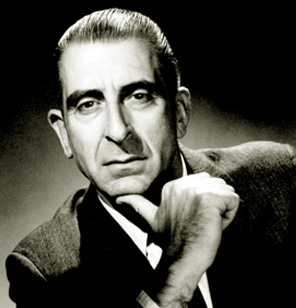
Former Chilean President Eduardo Frei Montalva
Decades of suspicion regarding the circumstances under which former Chilean president Eduardo Frei Montalva met his end have seemingly terminated into an expected outcome. During a court sitting on March 7, Andres Antonio Valenzuela, known as 'el Papudo', from the Comando Conjunto declared that Frei was assassinated during his stay at the Clinic Santa Lucia following a hiatal hernia operation.

According to Valenzuela's testimony, the news was related to him by a colleague, Alex Carrasco, while visiting the Chilean Embassy in Peru. Working as a nurse at the Clinica Santa Lucia, Carrasco's wife  revealed that a medical practitioner had murdered Frei by applying infected compresses to the post-operative wound.

It is stated that the infected compresses were prepared by Eugenio Berrios, who was later murdered in Uruguay. Berrios, a DINA agent and biochemist, was tasked with producing biological and chemical weapons for the dictatorship together with CIA and DINA agent, Michael Townley.

Valenzuela has lived in exile in France after deserting Chile in 1984, following his defection from the Air Force and the Joint Command, as well as divulging of information regarding kidnappings, torture and disappearances of Pinochet's opponents. He deemed his return to Chile as an effort "to cooperate with regard to all cases pertaining to human rights violations".

Frei's relatives deemed the report as "confirming what Chileans already know, proving that there was organisation within the dictatorship to commit crimes against humanity."

The nature of the crime and recently revealed proof is also reminiscent of the sinister circumstances surrounding Pablo Neruda's death. While preliminary analysis confirmed the presence of cancer in Neruda's body, testimony by Manuel Araya with regard to Neruda's death at the hands of the dictatorship through lethal injection warrants further attention and investigation.


Sunday, January 5, 2014

Santiago Court of Appeals seeks the extradition of Adriana Rivas Gonzales, former DINA agent and secretary to Manuel Contreras

Imagen foto_00000001
The Santiago Court of Appeals has announced its intention to seek the extradition of former DINA agent and secretary to Manuel Contreras, Adriana Rivas Gonzales. Rivas is implicated in the detention and disappearance of former Communist Party militant Victor Diaz Lopez, one of the many victims in DINA's targeting and extermination of militants during the clandestine operation known as Calle Conferencia. Victor Diaz was detained in Cuartel Simon Bolivar, tortured on the parilla, asphyxiated and later administered a cyanide injection by Gladys Calderon.

Rivas, who currently resides in Australia, defended DINA's torture practices as a "necessary tactic" to coerce leftist militants to reveal their plans and association with others in the struggle against the fascist dictatorship The former Brigada Lautaro agent stated that Pinochet was "a good president" and disassociated herself from the fate of Chile's desaparecidos, adding that the years spent working as a DINA agent were the best years of her youth.

At the age of 20, Rivas joined the Ministry of Defence, taking up a secretarial role. in 1974 she joined DINA after taking instruction in military intelligence and was incorporated in the infamous Brigada Lautaro - organised by Manuel Contreras to provide protection for influential officers within DINA. The brigade was later entrusted with clandestine operations relating to the detention, torture and extermination of MIR and Communist Party militants, operating secretly at Cuartel Simon Bolivar, also described as the place where no one got out alive. The existence of the extermination centre was revealed by Jorgelino Vergara Bravo, whose testimony as narrated to Chilean investigative author Javier Rebolledo included torture practices, the administration of cyanide injections prior to the disposal of bodies, the packaging and disappearance of bodies, mock executions, sarin gas experiments by Michael Townley which were witnessed by various DINA officials, looting, organ trafficking in coordination with Colonia Dignidad, and the degradation inflicted upon detainees as they begged to be murdered in order to avoid systematic and incessant torture.

Rivas has been living in Australia since 1978. Her return to Chile in 2006 to celebrate her niece's wedding resulted in her indictment by Chilean courts for her role in Calle Conferencia. Following her release on bail, Rivas was aided by a friend in absconding from Chile and returned to Australia via Argentina.
 

Friday, December 27, 2013

El despertar de los cuervos. Tejas Verdes, el origen del exterminio en Chile

El Despertar De Los Cuervos Tejas Verdes. El Origen Del Exterminio En
Following the macabre narration ‘La Danza de los Cuervos: el destino final de los detenidos desaparecidos’, which describes the torture and extermination of dictatorship opponents carried out in Cuartel Simon Bolivar, Javier Rebolledo’s latest book, ‘El despertar de los Cuervos. Tejas Verdes, el origen del exterminio en Chile’ (Ceibo Ediciones, 2013) provides a detailed account of DINA’s formation in Tejas Verdes – the location where experimentation with torture was carried out in the early days of the dictatorship.

 
The prologue to the book describes perversity as an inadequate term in relation to dictatorship atrocities committed in Chile. With the full truth of horrors still concealed from the nation, the subject of torture, extermination and disappearance is shrouded within various levels of anonymity – the anonymity enforced by DINA upon the disappeared, torturers whose identity is still undisclosed, and tortured victims who are reluctant to disclose their accounts and add to the Chilean collective memory framework.
Alternating between testimonies from torture survivors, information from official investigation documents and critical commentary, Rebolledo’s account of Tejas Verdes validates his earlier statement dwelling on the difference between conventional reporting about atrocities and survivor testimony. The dehumanisation of detainees through various forms of torture, degradation, manipulation of culture and a refusal to acknowledge individual identity of detainees created harrowing narratives vacillating between the need for recognition and the experiences which DINA attempted to mire within a widespread imposition of oblivion in order to consolidate impunity.
The importance of Tejas Verdes has been overshadowed by other infamous torture centres such as Londres 38 and Villa Grimaldi, as well as by operations carried out by DINA involving the extermination of MIR and Communist Party militants such as the Caravan of Death and Operacion Colombo. However, prior to the formal establishment of DINA, political opponents of Augusto Pinochet were already being tortured and disappeared from Tejas Verdes – the primary torture and extermination centre in Chilean dictatorship history.
Tejas Verdes served as the initiation into torture and a focal point for other torture and extermination centres in Chile. The majority of torturers received their instruction at Tejas Verdes – names such as Marcelo Moren Brito, Miguel Krassnoff Martchenko, Ricardo Lawrence and Cristian Labbé featuring prominently in dictatorship history. Operating under various brigades, DINA agents were tasked with intelligence operations, specific targeting of MIR and Communist Party militants, security and clandestine operations involving extermination of dictatorship opponents. Of particular mention are Brito’s role in the Caravan of Death and Krassnoff’s torture practices in Londres 38. Brigada Halcón, which operated in Londres 38, was also involved in the kidnapping, torture and murder of Víctor Díaz which occurred at Cuartel Simon Bolivar. The refinement of torture practiced in other torture centres such as Clínica Santa Lucia – an issue discussed by Patricio Bustos Streeter indicates a continuous attempt to obliterate any previous errors and cultivate an elaborate impunity. Rebolledo also discusses the existence of Brigada Mulchén under the command of Cristian Labbé – a relatively unknown brigade involved in clandestine operations but whose complicity has been difficult to prove, apart from the murder of Spanish diplomat Carmelo Soria in 1976.
Rebolledo shows how, despite judicial investigations initiated by Judge Alejandro Solis, it has been impossible to determine the number of detainees held in Tejas Verdes. What emerged, however, were the details of an appalling torture network headed by Manuel Contreras Sepulveda – a testimony of sadism in the name of eradicating Marxism from Chile. Torturers indicted by Judge Solis portrayed themselves as patriots unjustly accused, who had allegedly saved Chile from the grips of a communist dictatorship. Through the exhibited vestiges of dictatorial power during the trials of former DINA agents, such as Contreras’ threats to Judge Solis, it is possible to discern the traits of an organisation which operated with impunity.
The testimonies of Anatolio Zarate, Ana Becerra, Olga Letelier and Feliciano Cerda, supplemented by other narrations garnered from official investigation documents, portray the extent of human rights violations which DINA agents indulged in. The torture sessions were designed to create a barrier of immense magnitude between torturer and detainee, between detainee and humanity. Torture survivors describe electric shocks through use of the parilla, sexual violence and coercion, severe beatings, mock executions, the insertion of mice and spiders in the vagina, genital mutilation, use of dogs in sexual torture, mutilation, amputations and crude cauterisation, violation in the presence of family members, degrading language, as well as forced ingestion of urine and faeces. Pleas for death on behalf of detainees were met with additional bouts of torment.
Former soldiers who testified against Contreras claimed that detainees were lured to Tejas Verdes upon the premise of ‘discussing’ points of contention, which was imparted in an official letter. Prospective detainees usually complied and exhibited no resistance, discovering upon arrival the nature of DINA’s alleged discussion. Some were assassinated upon the fabricated pretext of attempting escape, others who voiced their fears of being murdered, such as detainee Lucho Normabuena, were systematically disappeared. Medical professionals who attempted to inscribe the truth about the cause of death were detained in Tejas Verdes. Detainees were forced to listen or witness their friends being tortured, while DINA embarked upon plans in the hope of extracting information from detainees upon other detained militants. Olga Letelier describes how torture sessions were usually attended by a group of DINA officers, alternating between watching and participating in torture.
The book also expounds upon the network of health care professionals recruited to supervise torture and instruct DINA torturers in recognising individual thresholds to reduce the possibility of murder during a torture session. With most medical torturers still benefiting from impunity, Chilean society has to contend with yet another contradiction – that of entrusting their health to doctors whose complicity in torture and murder is still concealed. A list of former medical torturers still practicing their profession has been circulating on the internet, in a bid to expose further DINA atrocities. The literature dealing with medical torturers in the book explicitly portrays how the dictatorship disfigured the profession. Among others, Rebolledo’s book refers to Vittorio Orvieto Tiplisky, who commenced his career with DINA at Tejas Verdes and later participated in the extermination of militants at Cuartel Simon Bolivar; nurse Gladys Calerdon who administered lethal injections to tortured detainees prior to their disappearance and Roberto Lailhacar, who recently admitted to the disposal of six disappeared dictatorship opponents in wells on his property at Curacaví.
Rebolledo has bequeathed another significant treatise to Chile’s recent history. It affirms a previous statement by Chilean author and survivor of Tejas Verdes, Hernan Valdes, who summarised Tejas Verdes thus: “All I knew about evil until then was only caricature, only literature. Now evil has lost all moral reference.” Pinochet’s plea for oblivion decades later served as a reminder of what leftist opposition had struggled against. Oblivion had already been implemented by the dictatorship prior to any public call, as evidenced from the early disappearances from Tejas Verdes, the certainty of impunity which was flaunted time and again at tortured detainees, the illegal adoptions of babies born to detainees in order to eliminate traces of rape in detention centres, the medical practitioners who worked under assumed names, thus separating their roles as torturers from the role assumed within the wider berths of society. The detailed testimony and commentary in this book prove that Tejas Verdes should be at the helm of any detailed research regarding Pinochet’s dictatorship – it is through an understanding of Tejas Verdes as the primary reference to human rights violation that one can comprehend the extended torture network and state complicity during the Chilean dictatorship.

Friday, November 8, 2013

Despite forensic report, judge insists upon further investigations into Pablo Neruda's death

According to the forensic report released yesterday by Servicio Medio Legal (SML), Pablo Neruda's death was caused by advanced prostate cancer, dispelling allegations of murder which have been sustained primarily by Neruda's chauffer and personal assistant, Manuel Araya. The awaited report ignited further conflict in Chile, challenging the dynamics of memory as opinion fluctuated in a spectrum which ranged from acceptance of the report, cynicism and outright denial.

Chile's right wing attempted to deride the exhumation of Neruda's remains, citing the forensic report as a reaffirmation of the obvious cause of death and describing the process as a manifestation of 'leftist paranoia'. The attempt to reclaim Neruda's memory as the poet of all Chileans, regardless of political affiliations, is reminiscent of the conspiracies detailed in El Doble Asesinato de Neruda, which explains the process through which the dictatorship and affiliated media sought to prepare the public for Neruda's imminent death.

Sentiment on behalf of Chile's left revealed the complexities of the country's memory struggle. While the report was accepted by some as a likely scenario, given the fact that Neruda indeed suffered from cancer, outrage over the published report overshadowed any form of acceptance.

Reaction on social media has cast doubts over the report, drawing comparisons with the death of former Chilean president Eduardo Frei Montalva, allegedly murdered by DINA while hospitalised in Clinica Santa Maria. Reports regarding his death Frei's death have been conflicting - some alleging that he had been administered thallium and mustard gas, while other reports declared the absence of toxic substances.

Neruda's chauffer, Manuel Araya, denounced the report and insisted that the poet had been murdered by the dictatorship at the Clínica Santa María. His allegations regarding the poet's death by lethal injection administered by a doctor whose identity is still disputed have been meticulously researched in light of Pinochet's determination to annihilate all leftist opposition, thus reducing the possibility of formidable opposition to his rule. Research has established that Neruda was planning to go into exile - such an accomplishment would have provided the possibility of an organised intellectual force against the dictatorship, a possibility which Pinochet dreaded due to the possibility of forming a government in exile and which led DINA to track the activity of dissidents and exiles.

Neruda's nephew, Rodolfo Reyes, insisted that the report is inconclusive and does not take into consideration all possible forms of assassination, such as the use of sarin gas - an opinion echoed by the family's lawyer, Eduardo Contreras, who insisted that further investigations should be carried out in order to dispel any fragments of doubt over the poet's death. Forensic expert Guillermo Repetto has also admitted the difficulty of detecting any traces of sarin gas and similar substances, indicating that despite the report's conclusion, the possibility of assassination at the hands of DINA cannot be absolutely eliminated. Judge Mario Carroza has declared the case still open and the possibility of assassination a cause for further investigation.


Wednesday, October 23, 2013

79 DINA agents accused of participation in Calle Conferencia I

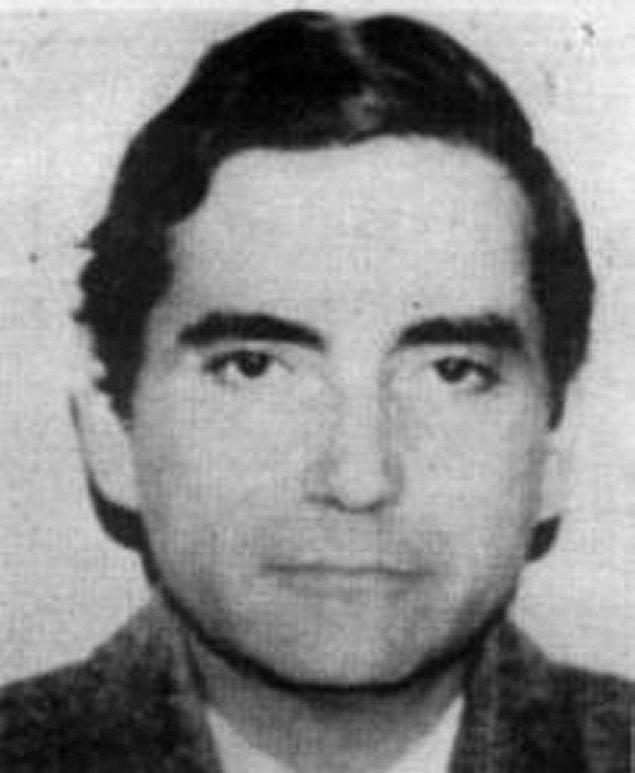
Mario Zamorano Donoso
Jorge Muñoz Poutays
Magistrate Miguel Vasquez from the Santiago Court of Appeals has issued an indictment against 79 former DINA agents for their participation in the abduction of seven dictatorship opponents: Mario Zamorano Donoso, Jorge Muñoz Poutays, Uldarico Donaire Cortés, Jaime Donato Avendaño, Elisa Escobar Zepeda, Lenin Díaz Silva and Eliana Espinoza Fernandez, as well as the murder of Víctor Díaz López, all victims of Calle Conferencia I. The clandestine operation targeted MIR and Communist party militants with the intention of destroying the clandestine opposition to Pinochet's  dictatorship between May 1976 and January 1977.

Uldarico Donaire Cortes
Jaime Donato Avendano


Mario Zamorano Donoso, Communist Party member, was detained during an operation which lasted from April 30 to May 6, 1976 from a house in Santiago, which was under DINA observation and its inhabitants forced to cooperate in the clandestine operation in the hope of luring Communist Party members to the dwelling. Zamorano was detained on May 4 and transferred to Villa Grimaldi.
On the same day at 21:00,   Jorge Muñoz Poutays was detained and also transferred to Villa Grimaldi.

20070320031848-elisa-del-carmen-escobar-cepeda-06may76.jpg
Elisa Escobar Cepeda
Eliana Espinoza Fernandez
Uldarico Donaire Cortez and Jaime Patricio Donato Avendaño were detained by DINA on May 5 and transferred to Villa Grimaldi.

Elisa Escobar Cepeda, also a Communist Party member, was detained on May 6 and transferred to Villa Grimaldi.

On May 9 1976, DINA agents detained Lenin Díaz Silva, who was transferred to Villa Grimaldi from where it is assumed that he was disappeared. Eliana Espinoza Fernandez was detained on May 12, 1976 and transferred to Villa Grimaldi.

Victor Diaz
Lenin Diaz Silva
The detention of Víctor Díaz López occurred on May 12 1976. DINA agents detained the Secretary General of the Communist Party and transferred him to Villa Grimaldi for interrogation and brutal torture. He was later taken to DINA's extermination centre Cuartel Simon Bolivar, where he remained for a few months prior to his murder and disappearance. Díaz was asphyxiated, his corpse packed in two big bags and strapped to metal rods ready for transfer to Pedelhue, lifted onto a Puma helicopter to be deposed in the sea, in an undisclosed location. Details regarding the detention of Víctor Díaz at Cuartel Simon Bolivar have been narrated by former DINA agent and aid to Manuel Contreras Jorgelino Vergara Bravo, protagonist of Javier Rebolledo's book 'La danza de los cuervos: el destino final de los detenidos desaparecidos'

Below is a list of former DINA agents charged with the crimes.
01. Manuel Contreras Sepúlveda
02. Pedro Espinoza Bravo
03. Carlos López Tapia
04. Miguel Krassnoff Martchenko
05. Ricardo Lawrence Mires
06. Jorge Madariaga Acevedo
07. Eugenio Fieldhouse Chávez
08. José Fuentealba Saldías
09. Hugo Clavería Leiva
10. José Soto Torres
11. Raúl Soto Pérez
12. Juan Carlos Escobar Valenzuela
13. Jerónimo Neira Méndez
14. Héctor Briones Burgos.
15. Pedro Mora Villanueva.
16. Roberto Rodríguez Manquel.
17. Leonidas Méndez Moreno.
18. Jorge Andrade Gómez.
19. Nelson Herrera Lagos.
20. Juan Morales Salgado.
21. Jorge Sagardía Monje.
22. Héctor Valdebenito Araya.
23. Federico Chaigneau Sepúlveda.
24. Bernardo Daza Navarro
25. Sergio Escalona Acuña
26. Guillermo Ferrán Martínez
27. Gladys Calderón Carreño
28. Elisa Magna Astudillo
29. Heriberto del Carmen Acevedo
30. Emilio Troncoso Vivallos
31. Claudio Pacheco Fernández
32. Jorge Díaz Radulovich
33. Orlando Altamirano Sanhueza
34. Eduardo Cabezas Mardones
35. Jorge Escobar Fuentes
36. René Riveros Valderrama
37. Jorge Pichunmán Curiqueo
38. Orfa Saavedra Vásquez
39. Celinda Aspe Rojas
40. Teresa Navarro Navarro
41. Berta Jiménez Escobar
42. Adriana Rivas González
43. Jorge Arriagada Mora
44. Pedro Bitterlich Jaramillo
45. Eduardo Oyarce Riquelme
46. Guillermo Díaz Ramírez
47. Ana Vilches Muñoz
48. Italia Vacarella Gilio
49. Jorge Manríquez Manterola.
50. Orlando Torrejón Gatica
51. José Manuel Sarmiento Sotelo
52. Manuel Obreque Henríquez
53. Gustavo Guerrero Aguilera
54. Eduardo Garea Guzmán
55. Juvenal Piña Garrido
56. Rufino Jaime Astorga
57. Luis Lagos Yáñez
58. María Angélica Guerrero Soto
59. Sergio Castro Andrade
60. Manuel Montre Méndez
61. Pedro Gutiérrez Valdés
62. Claudio Orellana de la Pinta
63. Joyce Ahumada Despouy
64. Hiro Álvarez Vega
65. José Miguel Meza Serrano
66. José Ojeda Obando
67. Carlos Bermúdez Méndez
68. Víctor Manuel Álvarez Droguett
69. Eduardo Reyes Lagos
70. Marilin Silva Vergara
71. Hernán Sovino Maturana
72. José Friz Esparza
73. Carlos Miranda Mesa
74. Camilo Negrier
75. Orlando Inostroza Lagos
76. Carlos López Inostroza
77. José Seco Alarcón
78. Lionel Medrano Rivas
79. Juan Suazo Saldaña
Wednesday, September 11, 2013

Former head of DINA Manuel Contreras denies torture and disappearances in dictatorship era

Interviewed by CNN Chile at the Penal Cordillera, former head of DINA Manuel Contreras denied the routine practice of torture and disappearance of socialists during the dictatorship era, adding that he vouched for the organisation as he had never ordered torture.

As Chile commemorated the 40th anniversary of the ruthless dictatorship which fragmented the country into divergent memory frameworks, Contreras sought to contradict the evidence of committed atrocities either by vehemently denying the confirmed facts by seeking to demean the credibility of torture survivors and evidence relating to the desaparecidos, or else projecting blame upon other forces of the dictatorship, such as the air force. The Valech and Rettig reports were also disregarded with Contreras simply claiming he was not ordered to impose torture practices upon detainees and that no one died while in custody.

It is estimated that over 1200 sites were turned into detention, torture and extermination centres during the dictatorship.

According to Contreras, the desaparecidos can be located at the Cemeterio General in Santiago, adding that all bodies were taken to the Servicio Medico Legal prior to burial in mass graves. The practice of disappearing the bodies of murdered socialist militants into the sea was also denied, with Contreras claiming that 'DINA had no ships or aircraft or helicopters', thus striving to impart the assumption that there was no collaboration with other powerful structures within the dictatorship. The desaparecidos, according to Contreras, 'died in combat'.

The Chilean Ministry of Interior dismissed Contreras' interview as 'having no significance or relevance', adding that the imprisoned general imposed destruction upon Chile, reminding people that his rhetoric has been dispelled by the Chilean courts.

The remarks uttered by Contreras elicited outrage in social media, compounded by the fact that right wing supporters clamoured online for the freedom of former military offices, who they described as political prisoners.

DINA's covert operations manual, known as 'Secreto 28', instructs agents to take advantage of instances when people believe the law is not being violated, as it allows further freedom to infringe. The 108 page document instructs DINA to violate the law and ensure that all traces of such violations should be appropriately concealed in order to avoid the possibility of implicating the state and authorities.

President Sebastian Piñera condemned the human rights violations which occurred during Pinochet's era; however he expressed the opinion that both sides of the political spectrum should assume responsibility, adding that Salvador Allende's government 'broke the legality and rule of law'.

Meanwhile in Santiago, activists are determined to continue the struggle for the memory of the desaparecidos. It has been reported that Santiago will be 'bombarded' with thousands of photos bearing the faces of Chile's desaparecidos in various places, including the notorious detention and extermination centre, Cuartel Simon Bolivar.


Friday, August 23, 2013

Pinochet era biological and chemical weapons clandestinely destroyed

A recent declaration by the Institute of Public Health acknowledged Pinochet's possession of chemical weapons and their destruction in 2008. Ingrid Heitmann, former director of the institute, declared that Pinochet had obtained 'enough chemical weapons to eliminate thousands of people in Chile and abroad'.

Human rights lawyer Nelson Caucoto has expounded upon the importance of disclosure, in order for Chileans to comprehend the character of the armed forces, as well as the 'culture of death' operating during Pinochet's dictatorship. The destruction of the weapons, according to Carmen Hertz, may have also served to annihilate proof of the chemicals being used in assassinations. The same concern was echoed by former health minister Alvaro Erazo, who claimed to have no previous knowledge of the weapons' existence. Both Caucoto and Hertz have called for further investigations, with Caucoto stating that Chileans have the right to learn about the 'culture of death' still heavily protected in Chile by the military. As in the case of Victor Jara's murder, Caucoto reiterated the lack of cooperation exhibited by the Chilean Armed Forces, who continue to withhold information which, if declassified, would shed light upon the multitude of atrocities committed by the dictatorship.

Previous reports and research indicate that the manufacture of such weapons, entrusted to Eugenio Berrios and Michael Townley, was a priority for DINA in relation to el Plan Condor. Human experiments involving sarin gas were carried out on detainees held in Cuartel Simon Bolivar, epitomised by the torture inflicted upon two unidentified Peruvians who were forced to inhale the lethal spray and later administered a cyanide injection by Gladys Calderon. Other experiments were conducted upon detainees held at Colonia Dignidad - a detention centre which also hosted a laboratory used for the production of bio-chemical weapons.

In July 1976, Spanish diplomat, former Unidad Popular advisor and member of CEPAL Carmelo Soria was abducted by DINA agents and his corpse discovered in Canal del Carmen in Santiago. Despite dictatorship reports claiming his death had occurred as a result of a car accident, Soria had been detained in Via Naranja - the same location used by Michael Townley and Eugenio Berrios for their clandestine work, and subjected to sarin gas.

Following the assassination of Orlando Letelier in Washingtom, Eugenio Berrios was helped to flee to Uruguay to avoid testifying regarding his role in el Plan Condor, including the murder of Carmelo Soria. In November 1992, having escaped from the house of Uruguayan Colonel Eduardo Radaelli, Berrios declared to the police that he was being held hostage upon orders from Pinochet. His body was discovered three years later on the beach of el Pinar.

Suspicions have also been raised regarding the deaths of former president Eduardo Frei Montalva and Chilean poet Pablo Neruda, both believed to have been administered a toxic substance while at the Santa Maria Clinic.


Monday, August 19, 2013

Search for desaparecidos in Curacaví

Imagen foto_00000002
Former DINA agent Roberto Emilio Lailhacar Chavez
Based upon testimony by a former DINA agent and psychiatrist Roberto Emilio Lailhacar Chavez, the Chilean police section investigating human rights violations (PDI) and Servicio Medico Legal (SML) are searching for the remains of at least six victims of the dictatorship. According to  Lailhacar's testimony, the bodies were thrown into wells built on his property at Curacaví. The atrocity is estimated to have occurred between 1973 and 1975.

In his role as psychiatrist, Lailhacar assisted torturers through conducting psychiatric analysis of detainees in various torture centres, including Clinica Santa Lucia which fell under the administration of Werner Zanghellini Martinez, who was accused by Villa Grimaldi survivors of allegedly administering an injection containing the rabies virus to dictatorship victim and desaparecido, Jorge Fuentes Alarcon.

The investigation has been ordered by Judge Sylvia Pizarro from the Court of Appeals in San Miguel. In his testimony, Lailhacar stated he is unaware of the identities of the desaparecidos disposed of in his property - "they could be from Santiago, Curacaví, or any nearby area". The excavation is expected to pose several difficulties as it involves an investigation of various wells on the property which have since been blocked with cement. The same property had also been utilised to host functions and social gatherings for DINA's top command.

Following the dissolution of DINA and later collapse of Pinochet's dictatorship, Lailhacar occupied the role of president of the 'Sociedad Chilena de Sexologia y Educacion Sexual' in Providencia until 2001.

Further information about the case and the dynamics of DINA, which originated from the Tejas Verdes contingent, will be divulged in Javier Rebolledo's forthcoming book published by Ceibo Ediciones, 'El despertar de los Cuervos: Tejas Verdes, el origne de extermino en Chile'.


Monday, June 3, 2013

Alleged assassin of Pablo Neruda is former CIA and DINA agent Michael Townley

Pablo Neruda
After taking into consideration additional evidence in the compilation regarding the possible assassination of Chilean poet Pablo Neruda, Chilean courts have issued orders to search for the mysterious 'doctor' who allegedly murdered Neruda by injecting a toxic substance in his abdomen. Following two years of investigations, Dr Sergio Draper testified that there had been another doctor with Neruda at the Clinica Santa Maria.

'Dr Price', widely assumed to be an alias for a DINA agent tasked with assassinating the poet, is reported to have been with Neruda on the day he died. A tall, blond and blue eyed man, the description matches that of former CIA and DINA agent Michael Townley, living under the US witness protection programme as part of a plea bargain after confessing to the murder of Carlos Prats and Orlando Letelier.


Michael Townley, ex CIA and DINA agent
Apart from the well known murders of Prats and Letelier, Townley was also a major collaborator at Cuartel Simon Bolivar - the torture and extermination centre which remained DINA's most heavily guarded secret prior to Jorgelino Vergara's testimony regarding the methods of torture and disappearances of prominent MIR and Communist Party militants. Together with biochemist Eduardo Berrios, Townley was responsible for the production of sarin gas and was a frequent visitor to Cuartel Simon Bolivar and Colonia Dignidad, where detainees were used to conduct biological experiments.

The recent developments would seem to render cries of a 'leftist conspiracy' as futile, strengthening Manuel Araya's consistent narrative of an assassination, as opposed to death caused by advanced and metastatic prostate cancer.

For further reading about Michael Townley's role in DINA, see La Danza de los Cuervos: el destino final de los detenidos desaparecidos (Ceibo Ediciones, 2012). Araya's testimony about Neruda's assassination is compiled by authors Francisco Marin and Mario Casasus in El Doble Asesinato de Neruda (Ocho Libros, 2012)


Friday, May 24, 2013

Five former DINA agents sentenced for the detention of MIR militant Alfonso Chanfreau Oyarce

Manuel Contreras Sepulveda, Miguel Krassnoff Martchenko, Marcelo Moren Brito, Ricardo Lawrence Mires were yesterday sentenced to ten years imprisonment for the detention and disappearance of MIR militant Alfonso Chanfreau Oyarce. Basclay Zapata Reyes was sentenced to three years' imprisonment for complicity in detention and torture while another indicted agent, Gerardo Urich Gonzales, was absolved.

Alfonso Chanfreau, a philosophy student and MIR militant, was detained on July 30, 1974. At approximately 11:30pm, a  number of agents surrounded Chanfreau's dwelling - orders came directly from Contreras. His wife; Erika Hennings, and their daughter were transferred to her parents' home. Chanfreau was taken to Londres 38 and tortured, in an attempt to garner information about other militants. Enraged by Chanfreau's silence, DINA agents detained Erika, taping her eyes shut as the vehicle passed the Mapocho river in order to render oblivious of her surroundings. She was transferred her to Londres 38 and tortured in the presence of her husband in order to force him to collaborate with the dictatorship.

Marcia Alejandra Merino, a former MIR militant turned collaborator, was instrumental in the detention and subsequent torture of Chanfreau. It is reported that while at Londres 38, Merino sought out Chanfreau, pleading forgiveness for his plight and stating that she had collaborated with DINA to avoid further torture. Luz Arce Sandoval, another militant turned collaborator whose testimony proved vital for the Rettig Commission, declared that she was forced to witness Chanfreau being tortured.

On December 17, 1974 ,the Interior Ministry gave orders regarding Erika Henning's exile, while denying that Chanfreau had ever been detained. Chanfreau's name later appeared on the list of the 119, also known as Operacion Colombo - one of the dictatorship's fabrication of memory in which it was claimed that certain MIR and Communist Party militants had died as a result of infighting while abroad.

Testimony from witnesses indicate that Chanfreau was intensely tortured, as DINA believed he had access to fundamental information which would aid them in the destruction of MIR.

As in other cases, justice continues to be seriously hampered owing to impunity laws. The former agents will serve their sentences in Penal Cordillera, described by many as a luxurious five start dwelling, while dictatorship survivors and relatives of the desaparecidos remain entrenched within a fragment of mangled memory which is temporarily alleviated by judicial sentences long due. Former agents still retain their oath of silence about the the systematic disappearance of detainees, which makes a further recovery of memory an improbable accomplishment.

Sunday, May 12, 2013

Additional prison sentence for former DINA agent Miguel Krassnoff Martchenko

Miguel Krassnoff Martchenko
The Santiago Court of Appeals has sentenced former DINA agent Miguel Krassnoff Martchenko to 541 days in prison for the torture of MIR militant Guacolda Rojas Pizarro during her detention at Villa Grimaldi.

Krassnoff, who is already serving a 144 year prison sentence for his role in torture and disappearance of leftist militants and sympathisers, has been condemned by Judge Mario Carroza for subjecting Rojas to beatings, various forms of sexual torture and applying electric current to sensitive parts of the detainee's body. Rojas was later transferred to Tres Alamos and Cuatro Alamos, finally being released from her ordeal.

In a previous conviction for torture and disappearance of Maria Cecilia Labrin Saso, Krassnoff sought to reinvent his image of notorious torturer who never bothered to shield his identity from detainees, into that of a researcher employed to study the dynamics of 'terrorist groups like MIR'.

Human rights supporters and groups concerned with furthering the struggle for memory in Chile do not deem the judicial ruling as particularly effective, considering the luxurious incarceration epitomised by the Penal Cordillera - a military building bequeathed to Augusto Pinochet's convicted agents. Apart from the privileged surroundings, including the use of lavish recreations areas, the torturers have also been entitled to benefits and pensions depending upon their rank during the dictatorship.

Chile's right wing, however, still hails Krassnoff as 'innocent' and patriotic. Gabriela Silva Encina's book 'Miguel Krassnoff: Preso por Servir a Chile' (Miguel Krassnoff: Incarcerated for serving Chile) remains touted as a knowledgeable treatise amongst neoliberal circles, despite the fact that the historian denies any human rights violation during Pinochet's dictatorship.

Friday, May 3, 2013

Four DINA agents sentenced for the disappearance of María Cecilia Labrín Saso

On April 30, 2013 Judge Leopoldo Lanos sentenced former DINA agents Manuel Contreras Sepulveda, Miguel Krassnoff Martchenko, Marcelo Moren Brito and Basclay Zapata Reyes to ten years imprisonment for the detention and disappearace of MIR militant María Cecilia Labrín Saso.

Labrín, aged 25, was detained on August 12, 1974 in the presence of her family by DINA agents, while resting due to a difficult pregnancy. The supposedly brief interrogation evolved into disappearance as the family sought information about Labrin's whereabouts in vain. Testimony by former MIR militant and torture survivor Erika Hennings place Labrin at Londres 38 and tortured by Contreras, Krassnoff, Brito and Reyes. Other detainees, such as Oscar Armando Alfaro Cordova (detained in July 1974) and Raul Alberto Iturra Munoz (detained in January1974) testify to her presence in Londres 38 and Cuatro Alamos respectively. According to evidence provided in court, it is documented that Labrin was transferred and held in Cuatro Alamos on August 17, 1974, accused of participation in MIR related activities.

Labrin's presence at Londres 38 was also witnessed by former MIR militant turned DINA collaborator Luz Arce Sandoval. Arce's testimony before the Rettig Commission provided a wealth of information about the intricacies of DINA and 'justification' for the betrayal of MIR militants and comrades, which she insists only damaged the 'peripheral' structure of the leftist organisation(Lazzara, 2011).

Questioned about DINA's operations in Londres 38, Contreras stated that he 'knew of its existence' but was not knowledgeable about the objectives. despite the lack of collaboration in behalf of Contreras, the court was able to provide evidence of collaboration in the detention, torture and disappearance of Labrin through testimony by other DINA agents including co-accused Reyes, as well as information and evidence garnered from the Truth and Reconciliation Report, which identified Contreras as in command of all operations pertaining to structure, organisation and detention centres.

Krassnoff sought to reinvent his role as torturer into that of an analyst undertaking intelligence studies with regard to 'terrorist groups like MIR' - a statement contradicted by numerous witnesses, including Erika Hennings as well as co-accused Reyes who gave evidence about the structure of Brigada Halcon and Krassnoff's role in persecuting MIR militants.

Denials by the accused reeked of the impunity and secrecy which DINA availed itself of. To this day, there is no information as to how the disappearance of Labrin was carried out.
 

Tuesday, April 16, 2013

Asociación Ilícita: los archivos secretos de la dictadura

This book review was first published in Chileno here.

Asociación Ilícita: los archivos secretos de la dictadura
Carlos Dorat & Mauricio Weibel
Ceibo Ediciones, 2012

Through now revealed secret government documents, Asociación Ilícita: los archivos secretos de la dictadura details the extent of the far-reaching reign of terror imposed by Augosto Pinochet's dictatorship. Ramona Wadi reviews.


Re-enacting Chile’s dictatorship history is an arduous task, undoubtedly hindered by Augusto Pinochet’s insistence upon oblivion and legally sanctioned by the enacted impunity laws. Seeking to annihilate memory by imposing a reign of persecution, torture, disappearances and exile, the struggle to delegitimize the leftist struggle degenerated into Pinochet’s obsession to legitimise his dictatorship. Evidence compiled by authors Carlos Dorat and Mauricio Weibel reveals a sinister collaboration extending beyond the secret network Dirección de Intelligencia Nacional (DINA) and later Central Nacional de Información (CNI), involving ministries, embassies, diplomats, the FBI, the Vatican and right wing Latin American governments.

Asociación Ilícita: los archivos secretos de la dictadura (Ceibo Ediciones, 2012) examines documents which for some reason, failed to be destroyed by the CNI in 1988 prior to the transition period. The documents, detailing extensive correspondence on behalf of Pinochet, are mainly attributed to Manuel Contreras Sepulveda, Odlainer Mena, Humberto Gordon and Hugo Salas, proving the extent of collaboration between various governmental and international bodies, as well as incursions to divert civilian attempts to shed light upon Chile’s reality. From El Plan Condor to inscribed orders from Pinochet requesting the detention of socialist opponents, terror and diplomatic strategy comprise the analysis of what the authors term ‘a catalogue of horror and intolerance’.

September 11, 1973 unleashed the neoliberal experiment upon Chile, supported by the US which was, in Kissinger’s words, unwilling ‘to stand by and watch a country go communist due to the irresponsibility of its people. The issues are much too important for the Chilean voters to be left to decide from themselves’. Following an initial purging of socialism in Chile, the published documents in this book reveal how political strategy, in collaboration with the Vatican, was aiming to install Pinochet as an icon of freedom and anti-communist struggle. Apart from the well known targeting of Communist Party and Movimiento Izquierda Revolucionario (MIR) militants, the military advocated a complete dismantling of social movements, student organisations and embarked upon restricting the Church’s activities. With regard to the latter, correspondence with the Vatican illustrates the alignment of the church oligarchy with Pinochet’s dictatorship, as opposed to priests working in the country who, contrary to what had occurred in other countries, aligned themselves with the left. While the Vatican urged priests to adhere solely to ceremonial roles, Cardinal Raul Silva Henriquez had abandoned the designated conservative role in favour of exposing dictatorship atrocities through the Vicaria de la Solidaridad. Part of the political strategy against human rights groups was to seek invalidation of exposed atrocities by citing Marxist infiltration.

A brief overview of DINA establishes an ideological framework attributed to Jaime Guzman, who fostered a counterinsurgency programme based upon combating Marxism and seeking the annihilation of social movements from the political scene. As DINA’s power intensified, counterinsurgency became central to the stability of the dictatorship, lending the state a channel through which to intensify diplomatic efforts with other right wing governments and repressive bodies, in order to present a formidable opposition to organisations expressing their outrage at the widespread violence. Documents relating to Operaciones Epsilon reveal that former head of DINA, Manual Contreras, was authorised to give orders to various ministries. An 11 page document relating to the assembly of ‘Comision Interamericana de Derechos Humanos’ sought to ‘neutralise worldwide accusations of human rights violations in Chile’, instead proposing an emphasis of human rights disputes in Vietnam and the Soviet Union, among other countries. The neutralisation of any verbal opposition against the dictatorship was to be met with an open and clandestine psychological campaign, in order to preserve Chile’s ‘image’ from any possible ‘discrediting and spreading of false information’.

The political threat was personified in particular by the clandestine Communist Party and MIR, who waged armed resistance against the dictatorship and suffered great losses due to persecution and disappearances of many militants, including the notorious Operacion Colombo. The book states that, according to research carried out by renowned author Manuel Salazar, Contreras had been compiling information about political leaders of leftist organisations since Salvador Allende’s presidency. Related documents published in this book and stamped as confidential outline the activities of several left wing leaders, including Victor Diaz and Luis Recabarren.

‘The problem of human rights’ constituted a major problem for the dictatorship, as it relentlessly sought to portray any internal or external criticism as tarnishing the image of Chile. Despite the extermination of socialist leaders, subsequent regrouping of MIR, Movimiento de Acción Popular Unitario (MAPU) and other left wing groups gave rise to an initiation of protests against the dictatorship, with people demanding the return of their exiled relatives. Hundreds were massacred by the CNI, as the military was deployed to the streets in an effort to stifle dissent. As the dictatorship faced the most difficult years of its era, Guzman advocated an ideology shifting towards permanent military rule.

The authors describe the oppression as methodical – indeed the documents reveal statistical data of ‘terrorist activity’ and ‘manipulation of conduct’. The constant preoccupation and compilation of data enabled the dictatorship to enact legislation according to the circumstances, in order to ensure a continuation of impunity. A trend of state terrorism is easily gleaned from the documents produced in the book, as well as the analysis provided by the authors. The ‘Caravan of Death’, the ‘Plan Condor’, which was carried out in collaboration with other Latin American countries, ‘Operacion Colombo’ – also known as the Case of the 119, ‘Operacion Epsilon’ and the collaboration with the US regarding ‘the distortion of Chile’s truth in favour of Marxism’ gave rise to the tracking of dissidents' and exiles' activity abroad, in order to prevent the possibility of the formation of a government in exile. Embassies were also authorised to keep copies of any published material relevant to Chile, in particular reports concerning human rights violations. The exercise was described as ‘censorship of negative information’. However, the dictatorship’s targeting of any person suspected of harbouring leftist sentiment, even through association not related to political activity and irrespective of nationality, led to disclosure of torture practices in international media. The case of Sheila Cassidy – a British doctor suspected of having offered medical assistance to Pinochet’s opponents led to international outrage, which in turn the dictatorship tried to stifle by refusing to issue working permits for journalists travelling to Chile in order to report on human rights. State organisations were also forbidden to comment about Chile without prior permission granted through formal official channels. At least 761 journalists were prohibited from reporting about human rights violations in Chile and their details were included in the dictatorship’s archives.

Hostility against the media was enhanced by the fact that culture – an integral part of Allende’s campaign and perhaps synonymous with the nueva canción movement, was not to be stifled. Inti Illimani and Illapu, together with other singers in exile such as Angel Parra, Isabel Parra and Patricio Manns maintained their political stance and disseminated their convictions through music. The literature of Ariel Dorfman and Antonio Skarmeta was banned in Chile, as was the political thought of Eduardo Galeano and Karl Marx.

Perhaps the significance of this book lies in the fact that it is yet another sliver in Chilean memory elucidating the callous ideology behind the committed atrocities. By analysing this archive of documents, Dorat and Weibel have succeeded in reassembling the fragments of the dictatorship, most importantly eliminating the gap between the experienced violations and the dictatorship laws which ravaged the lives of thousands of Chileans.

Monday, April 1, 2013

Torture in Tejas Verdes (1)

According to the Rettig Commission report, the concentration camp 'Tejas Verdes' corresponds to Campamento N2 de prisioneros de la Escuela de Ingenieros Militares 'Tejas Verdes', used as a detention and torture centre from September 11, 1973 until mid 1974. Various socialist adherents detained in Tejas Verdes form part of the detenidos desaparecidos, including Miguel Rivas and Rebeca Espinoza.

Under the command of later DINA chief Manuel Contreras Sepulveda, Tejas Verdes was described by torture survivor Hernan Valdes as a centre of macabre violations. "... all I knew about evil until then was only caricature, only literature. Now evil has lost all moral reference.' (Valdes, 1974).

Former political prisoners and torture survivors cite extreme torture tactics as having been consistently applied to detainees, who were subjected to electric shocks, beatings, mock executions, burning of skin with wax and cigarettes, the pulling of nails, exposure to extreme temperatures, immobilisation, nakedness, sexual violence, deprivation of food and water, forced to eat their excrement and to listen to other detainees being tortured. Medical attention was restricted to checking each detainee's resilience, in order to avoid premature death and allow for other bouts of torture. 

A brief look at some of the DINA agents operating at Tejas Verdes reveals the extent of networking amongst other detention and torture centres.

Miguel Krassnoff Martchenko - later transferred to Londres 38 and Villa Grimaldi, also collaborated with Cuartel Simon Bolivar in the detention and torture of MIR militants.

Marcelo Moren Brito - head of Brigada Caupolican and in charge of Villa Grimaldi, also a participant in the murder of MIR secretary general Miguel Enriquez and accused of participating in the detention and disappearance of MIR militant Alfonso Rene Chanfreau Oyarce.

Ingrid Olderock - notoriously renowned for training dogs to violate women and associated with other torture centres, including Villa Grimaldi and Venda Sexy.

Cristian Labbe - personal friend of Krassnoff and later member of Brigada Halcon, instructor in torture methods and former mayor of Providencia.

Vittorio Orvieto Tiplizky: torture consultant. Referred to as 'el medico torturador'. Associated with Tejas Verdes and Villa Grimaldi.

Pedro Espinoza Bravo: associated with the 'Caravan of Death', torture at Villa Grimaldi, as well as the assassination of Orlando Letelier.

Gerardo Urrich Gonzales: tortured detainees at 'La Torre' in Villa Grimaldi and responsible for the disappearance of Rodolfo Valentin Gonzales Perez. 


Thursday, March 28, 2013

Bail granted to four former officials indicted for the murder of Victor Jara

Following the initial euphoria at Chilean efforts to bring Victor Jara's alleged killers to justice, the Santiago Court of Appeals has granted bail to four of the former DINA officials indicted for the nueva cancion singer's murder. Edwin Dimter Bianchi, Nelson Haase, Luis Bethke Wulf and Raul Jofre Gonzalez, all from the Tejas Verdes contingent under the command of Manuel Contreras have been granted bail against a guarantee of one million pesos each and will be released from jail within a few hours.


A Chilean court request to extradite Pedro Pablo Barrientos Nunez, identified by former conscript Jose Paredes Marquez as the one who killed Victor, has not yielded any positive results so far. Barrientos has been living in Florida ever since Paredes was arrested for his role in the murder and has denied the accusations against him, stating that he was never in the vicinities of Estadio Chile. Paredes, however, has declared that his access to the interrogation rooms during the first days of the dictatorship was facilitated through accompanying Barrientos as his bodyguard. 

The foundation 'Justicia Para Victor Jara' (Justice for Victor Jara) has issued a statement, declaring the sentence as an incentive for further struggle in order to achieve justice for Victor and all the victims of the dictatorship. Previous statements by the foundation and human rights lawyer Nelson Caucoto Pereira have attacked the impunity enshrined in dictatorship laws, as well as the refusal of the Armed Forces of Chile to reveal information which would lead to the conviction of senior DINA officials.

While the provisional release has been defined as standard practice and even expected by Caucoto, public opinion expressed on social media has been replete with outrage at the news, declaring all soldiers serving under the dictatorship as tainted with complicity and expressing little faith in the Chilean justice system.


Wednesday, February 13, 2013

Forty years later, Justice for Victor Jara: School of the Americas Grad Indicted in Murder of the Popular Allende-Era Singer/Activist

Supporters march during a funeral service of Victor Jara, December 5, 2009, thirty-six years after his incarceration and death.
This article was first published in Truthout here.

The move to extradite Florida resident Pedro Barrientos Nunez in connection with the murder of famed Chilean singer Victor Jara - a supporter of deposed President Salvador Allende - is re-igniting Chile's campaign for justice for victims of the Pinochet regime's reign of torture and violence.

The US-backed military coup in Chile on September 11, 1973, was a prelude to systematic state terrorism unleashed after the bombing of the presidential palace, La Moneda, and Salvador Allende's alleged suicide.

Allende's Popular Unity was a socialist movement that unified the workers' struggle within a realm of culture. The Nueva Cancion Chilena (New Chilean Song), born out of a necessity in the mid-1960s to articulate social struggle, became a popular feature during Allende's presidential campaign, with musicians wholeheartedly bequeathing their support.

Victor Jara, a Nueva Cancion singer synonymous with the movement, became one of the first victims of the dictatorship when he was brutally tortured and murdered after being apprehended at the Technical University and brought to Estadio Chile- the country's national sports stadium. Secrecy and impunity shrouded Victor's death, until testimony from a former conscript at Estadio Chile revealed the name of Victor Jara's alleged killer.

The name of Pedro Pablo Barrientos Nuñez became the source of a relentless campaign by Chilean social movements to pursue justice for Jara. A documentary aired in May 2012 by Chilevision, entitled Quien Mató a Víctor Jara? (Who Killed Víctor Jara?) drew upon the testimony of several survivors, conscripts, former lieutenants and activists to reconstruct the events leading to the singer's death. In the course of the documentary, ex-conscript Jose Alfonso Paredes Marquez alleged that Barrientos had pulled the trigger, shooting Víctor in the head. "He shot him at almost point blank range because the man would not answer him," stated Paredes.

The campaign "Justicia Para Víctor Jara" (Justice for Víctor Jara) gained momentum last year, with Joan Jara and lawyer Nelson Caucoto Pereira urging the Minister of Defense and the Armed Forces of Chile to reveal classified information that would lead to identifying the lieutenants responsible for Victor's murder.

On December 28, 2012, Chilean newspaper El Mostrador announced indictments had been issued against Barrientos, Hugo Sanchez Marmonti, , Raúl Jofré González, Edwin Dimter Bianchi, Nelson Haase Mazzei and Luis Bethke Wulf in connection with Jara's murder.
Another two former officials were later indicted: Jorge Smith Gumucio and Roberto Souper Onfray. Following the announcement, an international arrest warrant was issued for Barrientos, who had been living in Florida since the 1990s, and Paredes, the ex-conscript, was arraigned on charges related to his alleged role in Jara's death. Judge Miguel Vásquez denied bail to the seven former lieutenants, four of whom already are serving sentences for other unrelated crimes.

Almost 40 years after Jara's murder, Judge Vásquez said he had no doubt about Barrientos' role, despite Barrientos' claim that he was never inside Estadio Chile and "never having heard of the singer Jara in that era." Barrientos had previously stated he was in the vicinity of the presidential palace, La Moneda, during the military coup. Questioned by journalist Macarena Pizarro from Chilevision, he declared his intent to never return to Chile to face prosecution. "I do not have to face justice because I killed no one. I've been to Chile several times, but now, loud and clear, I won't go."

The extradition request detailed the events leading up to Jara's murder. On September 12, 1973, the Technical University was surrounded by soldiers, who apprehended students and staff barricaded in the building, transferring them to Estadio Chile under the command of the Tejas Verdes contingent.
Jara's popularity rendered him a threat to the military dictatorship. His support for Salvador Allende's Popular Unity, and his later role as ambassador for the government's politics and socialist culture, cultivated a symbol of resistance and unity with the campesinos. Upon his arrival at the Estadio Chile, a lieutenant nicknamed "el Principe" recognized Jara and singled him out for brutal torture. The identity of "el Principe" remains disputed, although in his testimony Paredes indicated the nickname referred to Nelson Haase. Judge Vásquez stated that Jara was shot 44 times on September 16 - four days after soldiers brought him to Estadio Chile.

Following his murder, Jara would have become one of Chile's well-known "los desaparecidos" (the disappeared), his body thrown outside the Metropolitan Cemetery for burial in a mass grave, had he not been recognized by a social activist, who alerted others to his fate. Following a secret burial, Joan Jara and her daughters fled to exile in the UK, risking their lives by smuggling Jara's recordings out of Chile at a time when any material related to the Nueva Canción was tantamount to conspiracy against the dictatorship.

The denial of involvement in Jara's murder was echoed by other former lieutenants, exhibiting an impunity bordering upon the ludicrous. From the non-committal replies, outright denial, to out-of-context afterthoughts, like Nelson Haase's, "I was never in Estadio Chile. I don't know it. I don't even like football," the former lieutenants relished their apparent impenetrable status. However, Paredes stated he accompanied Barrientos during the period when Estadio Chile was transformed into the nation's first torture and detention center, and also had access to the interrogation rooms.

All officials indicted for the murder of Jara formed part of the Tejas Verdes contingent, and operated directly under the command of Manuel Contreras Sepulveda, later head of DINA [Direccion de Intelligencia Nacional]. The Tejas Verdes contingent specialized in torture practices, later dispersing to hold official positions in other detention and torture centers throughout Chile, like Londres 38, Villa Grimaldi, Tres y Cuatros Alamos and the notorious extermination center Cuartel Simón Bolívar, headed by Manuel Contreras himself and collaborating with other officials like Miguel Krassnoff Martchenko, specializing in the detention of communist and MIR [Movimiento Izquierda Revolucionario] militants.

The role of the US in facilitating the coup against Salvador Allende is well known and asserted by various statements from Henry Kissinger, who declared the issue of communism in Chile "too important for the Chilean voters to be left to decide for themselves." An equally pivotal role that the US played in supporting the right-wing dictatorship was its training of soldiers and lieutenants through the School of Americas (SOA). Four of the indicted officials are SOA graduates, including Barrientos.

Established in 1946, the SOA trained more than 64,000 Latin American soldiers, bequeathing them a wealth of counterinsurgency techniques, torture instruction and intelligence tactics. The deceitful mission statement of the SOA deemed democracy an integral part of military training; however, Latin American history has been replete with accounts of torture corresponding to tactics learned at the SOA. In reality, the SOA appears to have constituted a military program aimed at eliminating the socialist revival which was intensified after the success of the Cuban Revolution. SOA Watch has established that one out of every seven DINA officials in Chile were enrolled in the school and responsible for the targeting of Communist and MIR militants.

Speaking out against impunity, lawyer Nelson Caucoto urged soldiers who were present in Estadio Chile to break their pact of silence about the atrocities committed, emphasizing a duty towards remembrance as opposed to strengthening Pinochet's hope for oblivion. After the screening of the documentary, Joan Jara asserted her belief "officials lied with impunity," and the expressed the necessity of investigating within the higher echelons of the military in order to extract any semblance of justice.

The extradition request has strengthened tenacity toward preserving memory and justice in Chile. Social networking sites have been influential in disseminating updates about the case. While Barrientos' Facebook profile appears to be inaccessible, his photo, together with the extradition request, has been a prominent feature of Chilean activists' clamor for the right to memory.
If the extradition and subsequent trials are successful, Chilean memory will have succeeded in implementing justice within a country still shackled by remnants of the dictatorship. Last year brought about a resurgence of tactics designed to eliminate references to human rights violations by deconstructing narrative and language. Reclaiming Jara's memory as inherent to the public space will serve as a catalyst for justice against decades of oppression that still flourish in today's society, as impunity provides a channel of legal and political control through torturers and DINA agents employed within the public sphere.

Copyright, Truthout. May not be reprinted without permission.

Saturday, December 29, 2012

La danza de los cuervos: el destino final de los detenidos desaparecidos

La Danza de los Cuervos: el destino final de los detenidos desaparecidos
Javier Rebolledo
Ceibo Ediciones, 2012

The history of Cuartel Simón Bolívar remained a heavily shrouded secret of Direccion de Intelligencia Nacional (DINA), until the pact of silence was broken by Jorgelino Vergara Bravo, known as ‘el Mocito’. A struggle for survival grotesquely transformed into a life of treason – a man of campesino origins working as a servant in the household of Manuel Contreras Sepulveda – Head of DINA, later progressing to inclusion in DINA and transferred to Cuartel Simón Bolívar. ‘La Danza de los Cuervos: el destino final de los detenidos desaparecidos’ (Dance of Crows: the fate of the disappeared detainees) delves into the atrocities committed by Brigada Lautaro and Grupo Delfín through Vergara’s testimony who, in 2007, declared the Cuartel as ‘the only place where no one got out alive’.  Residents living close to the extermination centre were reluctant to make friends, out of mistrust and the uncomfortable proximity to the terror inflicted upon detainees.
Vergara’s initiation into Manuel Contreras’ realm started with his employment as an errand boy. During the months spent at the household, Vergara equated respect with authority, particularly manifested in his obsession with weapon handling and ownership and learning to work in relation to crime, albeit unconsciously at first. Contreras’ power was gradually revealed – occasional phone calls from dictator Augusto Pinochet, the arrival of Uruguayan President Juan María Bordaberry and the ensuing collaboration in staging Operación Condór and Operación Colombo, the expensive automobiles, the presence of bodyguards and the visits of other DINA agents, such as Miguel Krassnoff Martchenko, Michael Townley and Juan Morales Salgado, were a fragment of the reality incarcerated within Cuartel Simón Bolívar.
Javier Rebolledo portrays Vergara’s testimony as a narration of memories, prompted by the author at times for clarification or further information; supplemented by the author’s research through official documents and court statements. However, it is essentially Vergara’s history intertwined with that of the torturers and the desaparecidos of Cuartel Simón Bolívar. Apart from his insistence that he was never involved in killing or torturing any of the desaparecidos, the sensation of blame is effortlessly enhanced. Indeed, Judge Victor Montiglio only acquitted Vergara on the grounds that he was not yet an adult according to the law, during his tenure working for DINA’s Brigada Lautaro and Grupo Delfín.
The initial realisation of betrayal is only intensified as the book progresses. Vergara’s betrayal of his campesino origins, his betrayal of DINA and, more importantly, the betrayal of Chile’s struggle against oblivion merge and distance themselves incessantly. The contrasts of relieving one’s conscience versus the convenience of acquittal, coupled with Vergara’s trepidation of a possible assassination for revealing DINA’s profoundly fortified secret, all point to complicity in the fate of MIR and Partido Comunista disappeared militants.
On January 20, 2007 Jorgelino Vergara Bravo broke the pact of silence after being falsely identified as the murderer of Víctor Manuel Díaz López, head of the clandestine organisation of Chile’s Communist Party. Insisting that he never killed or tortured any of the desaparecidos, Vergara’s testimony shed light on Cuartel Simón Bolívar as Chile’s torture and extermination centre. There had been numerous speculations about the existence of a site specifically used for the persecution, torture and annihilation of MIR and Communist Party Militants, but DINA refused to reveal any vital information. While Vergara was detained in a high security prison, 74 DINA agents were immediately arrested, leaving no chance for a possible corroboration between officials to avail themselves of impunity. Betrayals and denials ensued. Contreras denied ever having set eyes upon Vergara. On the contrary, Juan Morales Salgado, Head of Brigada Lautaro, was the first to affirm that Vergara ‘was neither an apparition nor paranoid’, confirming Vergara’s employment at Cuartel Simón Bolívar and his previous job as errand boy in Contreras’ household.
Montiglio’s perseverance in bringing the DINA agents to justice was abruptly terminated upon his demise from cancer in 2011. By that time, evidence about Cuartel Simón Bolívar, the Calle Conferencia cases, as well as the process of disappearing MIR and Communist Party militants and Operacion Retiro de Televisores was swiftly unravelling, revealing the ruthless mechanisms of Brigada Lautaro and Grupo Delfín.
Vergara’s previous fragmented knowledge, garnered from conversations between Contreras and other DINA agents, including Miguel Krassnoff Martchenko, Juan Morales Salgado, Burgos de Beer and Moren Brito, gradually manifested itself into revelations of actual torture and extermination ritual. Serving coffee and sandwiches to agents in the midst of torture sessions, Vergara recalls the indifference with which instructions on how to serve coffee jarred with the sight of a detainee writhing from excruciating torture. However, these scenes portrayed a fragment of the torture process. Vergara’s recollections of Dr Osvaldo Pincetti (also known as Dr Tormento) and detainees were impregnated with detail, yet the fate of the tortured dissidents remained obscured. Dr Pincetti specialised in hypnosis; on one occasion Vergara witnessed a victim being forced to watch himself bleed to death – a form of torture designed to coerce the dissident into signing false confessions or supplying information about Chilean dissidents.
The severity of torture ensured that detainees were exterminated and disappeared within seven days of arriving at Cuartel Simón Bolívar. Detainees were forced to listen to their compañeros’ anguish during torture sessions involving the parilla, which administered electric shocks to sensitive parts of the body, including the genitals. Sometimes detainees were beaten to death or asphyxiated. Nurse Gladys Calderon, another DINA recruit whose work experience included assisting Dr Vittorio Orvietto Tiplizky in Villa Grimaldi and DINA agent Ingrid Olderock, notoriously renowned for training dogs to violate women, administered cyanide injections to all detainees. Questioned about her role, Calderon deemed it ‘an act of humanity’ which ended the suffering of those destined to become the desaparecidos of Cuartel Simón Bolívar.
Vergara also narrates how detainees were used to test the manufacture of chemical weapons. Developed and manufactured by Eugenio Berriós and Michael Townley; a US citizen recruited by DINA and now living under the witness protection programme in the US, sarin gas featured prominently in Cuartel Simón Bolívar. Two Peruvian men were detained and brought to the Cuartel, where they were forced to inhale sarin gas in the presence of Contreras, Salgado, Barriga, Lawrence and Calderon. The Peruvians were administered electric shocks using a new device displayed by Townley and later beaten to death. Their bodies were probably disposed of in Cuesta Barriga – the site in question during the illegal exhumation of the desaparecidos’ bodies during Operación Retiro de Televisores in 1979.
 

Reinalda Pereira
Víctor Díaz
Memories of the torture inflicted upon Daniel Palma, Víctor Díaz, Reinalda Pereira and Fernando Ortiz Letelier are narrated in detail by Vergara, who describes Palma’s cries as being the loudest ever heard, prompting DINA agents to increase the sound level of their stereos to obliterate his cries. Díaz was tortured on the parilla, asphyxiated and later administered a cyanide injection by Calderon, upon direct orders from Morales. After manifesting her terror at the inability to protect her unborn child, Pereira was subjected to mock executions and severe beatings, incited by her pleas to DINA agents to kill her. Ortiz was beaten to death. The bodies were later subjected to further degradation – agents pulled out the teeth in a search for gold fillings. Later, the faces, fingers and any other particular features were torched to prevent any possible identification. As with other Calle Conferencia victims, the bodies of the detainees were ‘packaged’ during the night and ushered out of Cuartel Simón Bolívar, destined for burial in Cuesta Barriga or transferred to Pedelhue, loaded upon helicopters and dumped into the sea. According to Vergara, the desaparecidos were deemed ‘fodder for the fish’ by DINA agents. In 1976, 80 MIR militants suffered the fate of the detenidos desaparecidos – most of them through Cuartel Simón Bolívar.
Daniel Palma
Fernando Ortiz Letelier
Rebolledo’s intricate research constructs the alliance between agents of Cuartel Simón Bolívar and other detention and torture centres. A number of agents forming part of Brigada Lautaro and Grupo Delfín were part of the contingent from Tejas Verdes. As the persecution of MIR and Partido Comunista militants widened to encompass all of Chile, torture centres were set up around the country under the command of Manuel Contreras. At the time of Vergara’s inclusion in DINA, torture centres such as Villa Grimaldi, Londres 38, Tres y Cuatro Álamos and José Domingo Cañas were already operating under special brigades such as Brigada Halcón, headed by Miguel Krassnoff Martchenko and responsible for the torture of detainees at Londres 38.
 
Vergara recalls a visit to Colonia Dignidad, run by Paul Schäfer and notorious for its abuse against incarcerated minors. Rumours originating from Contreras’ bodyguards indicated that DINA agents profited from the desaparecidos by setting up an organ trafficking trade to Europe, with the recipient countries being Switzerland and Belgium.
 
Betrayals ensured within DINA following its disintegration after the assassination of Orlando Letelier. With the creation of the CNI, Vergara was transferred to Cuartel Loyola where he found himself lacking the imaginary protection offered by Contreras. Pressed by Rebolledo as to whether he participated in any assassinations after his stint at DINA, Vergara replies in a rhetorical manner, implying self-defence against aggression as implication of participation. Rebolledo remarks upon the vagueness of Vergara’s recollections in this period, noting once again that Montiglio had exonerated him solely because he had been a minor during his time at Cuartel Simón Bolívar. The vague recollections coincide with Operacion Retiro de Televisores – an encrypted message issued by Pinochet ordering agents to illegally exhume the remains of the bodies buried clandestinely in Cuesta Barriga. The remains were either dumped into the sea or burned, to avoid any official investigation. Bone fragments later discovered on site led to the identification of Fernando Ortiz Letelier, Ángel Gabriel Guerrero, Horacio Cepeda and Lincoyán Berríos – all victims of Calle Conferencia.
 
The book is punctuated with the contrast between the lives of the desaparecidos and the agents in charge of their extermination, laying bare the crudeness with which various sections of the Cuartel served for disparate purposes – desaparecidos left to bleed to death in the gym, which would later be cleaned and used by the agents for their physical training. Sporting events were also held between different brigades of various torture centres.
 
Undoubtedly, Rebolledo’s research is striving to shift the dynamics of impunity. Recently the author was subjected to acts of intimidation when his research detailing further DINA atrocities was stolen. Chile’s dictatorship disguised under a semblance of democracy is still resisting the masses’ struggle in favour of memory.  As stated in the first chapters, various agents still have not been processed for their roles in dictatorship crimes, whilst others continue to wield influence in Chile’s legal and political hierarchy.
‘La danza de los cuervos’ is both an indispensable read and a significant contribution to Chile’s struggle against oblivion and impunity. The exploitation of humanity decreed by Pinochet and Contreras is vividly depicted without committing error of shifting the focus from the detenidos desaparecidos. Rebolledo weaves his discourse out of a sequence of betrayals within diverse factions in Chile, compellingly bequeathing the memory of the desaparecidos to a country split between loyalty to the dictator’s manipulation and the masses clamouring for an integral part of their narrative which wallowed in oblivion for decades.